






What are BMAC and SVF?
Both are autologous regenerative-medicine procedures in which tissue harvested from the patient’s own bone marrow or fat is centrifuged to create a concentrated fraction containing stem cells, then administered the same day. Harvesting, concentration, and the procedure all happen within the medical facility in a single session.

BMAC is a bone marrow aspirate concentrate. It’s made by aspirating bone marrow from the front of the pelvis and then centrifuging it, resulting in a form roughly 6 times more concentrated than the original aspirate. It contains mesenchymal stem cells that can differentiate into cartilage, bone, and muscle, hematopoietic stem cells, growth factors such as PDGF, TGF-beta, VEGF, and BMP-2, and immune-modulating cells that calm chronic inflammation. In other words, it’s a natural combination package that holds stem cells, growth factors, and immune-modulating molecules all together.
SVF is the stromal vascular fraction. It’s a cell fraction isolated after aspirating and processing fat from the abdomen or thigh, and its greatest strength is the abundance of stem cells. The number of stem cells obtained from 1 g of fat has been reported to be roughly 500 times that of bone marrow (Kern S et al., Stem Cells, 2006). What’s more, unlike bone marrow, the yield is relatively well maintained with age. It contains adipose-derived mesenchymal stem cells at its core, along with vascular progenitor cells, pericytes, macrophages, and lymphocytes.

If PRP sends the recovery signal, SVF and BMAC are the stage where you introduce the very cells that direct the recovery.
What are they used for?
In current clinical practice they’re used in four areas: knee osteoarthritis, facial anti-aging, hair loss, and whole-body anti-aging. The reason a single cell resource can work across so many areas is that the core action of mesenchymal stem cells is to send recovery signals to the surrounding cells.
Knee osteoarthritis has the strongest body of evidence. A 2025 comprehensive review of BMAC concluded that BMAC promotes cartilage regeneration and modulates inflammation better than hyaluronic acid, PRP, or steroids. In a 4-year prospective study published in Scientific Reports in 2024, the IKDC scores of 37 knees with severe knee osteoarthritis improved from 56 to 73 and WOMAC scores from 40 to 18, with a 95% success rate. Not a single patient required joint replacement surgery over the 4-year follow-up period. SVF, too, demonstrated improvements in pain and function versus placebo in a phase 3 randomized controlled trial in the American Journal of Sports Medicine in 2023.
For facial anti-aging, a clinical study published in BioImpacts in 2016 reported that after transplanting SVF obtained from autologous fat into the nasolabial-fold area, dermal thickness and density increased meaningfully and elasticity and the microvascular network improved. The key point is that it’s a method that rebuilds the very structure of the skin rather than filling in the surface.
For hair loss, in a 30-person prospective study in Archives of Dermatological Research in 2023, hair-shaft diameter increased by about 51% at the 6-month mark after a single scalp injection of autologous SVF, and hair density also rose. A systematic review the same year pooled 9 studies and concluded that density consistently increased with no serious adverse effects, and that there is synergy when combined with minoxidil or finasteride.
Whole-body anti-aging is the area where research is advancing most rapidly. It’s drawing attention because the exosomes and growth factors secreted by mesenchymal stem cells appear to work in the direction of calming chronic inflammation, improving mitochondrial function, and restoring immune balance.
How is this different from PRP?
The biggest difference is simple. PRP delivers growth factors — recovery signals — while SVF and BMAC deliver the stem cells themselves. In terms of strength of action, PRP is moderate and the two procedures are on the stronger side; for duration of effect, PRP lasts 6 to 12 months while the two procedures last 12 months or more, with some studies reporting up to 24 to 48 months. As for procedural burden, PRP is the lightest since it’s done with a blood draw alone, whereas the two procedures require local anesthesia and harvesting.
For mild knee osteoarthritis or mild hair loss, start with PRP; for moderate to severe arthritis, or when you also want to address the face, hair loss, and the whole body together, proceed with SVF or BMAC. A stronger procedure isn’t automatically better — the right answer is to choose in a stepwise way.
How do you choose between SVF and BMAC?
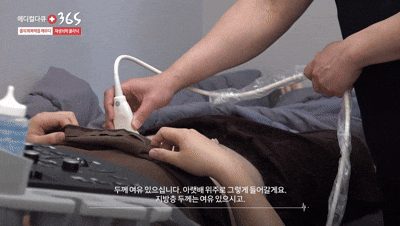
They differ from the harvest site onward. For BMAC, bone marrow is aspirated from the iliac crest at the front of the pelvis under local anesthesia; for SVF, fat is aspirated from the abdomen or thigh under local anesthesia. The time required also differs — about 60 to 90 minutes for BMAC and about 3 to 4 hours for SVF.
BMAC is a good fit when the main goal is knee osteoarthritis or cartilage damage that has progressed to a severity of KL grade 3 to 4, and for those who want action specialized to bone and cartilage. SVF is a good fit for those who want to care for knee osteoarthritis, facial anti-aging, and hair loss all at once, and for those who want strong anti-inflammatory and whole-body anti-aging effects. When you want a powerful regenerative effect for severe arthritis or want to treat several areas simultaneously, the two procedures are sometimes combined.
Many knee-osteoarthritis patients in their 50s and 60s who receive SVF also have a facial dermal transplant or scalp injection on the same day. This is possible because a single fat harvest secures enough cells. For these patients, SVF is practically more advantageous than BMAC.
What procedure does this go through in Korea?
The Advanced Regenerative Bio Act is a law created to manage, at the national level, the safety of regenerative-medicine procedures that use stem cells and immune cells. It divides procedures into three tiers by risk: low, medium, and high. SVF and BMAC qualify as minimally manipulated autologous cells and fall into the low-risk category. Because they undergo only centrifugation and concentration after harvesting and are administered the same day, the cells’ original state is kept almost intact.
The route you take depends on the purpose. For a disease-treatment purpose, the procedure becomes subject to review under the Advanced Regenerative Bio Act and must satisfy two conditions: the facility must be a Ministry of Health and Welfare–designated advanced regenerative medicine facility, and the relevant indication must have been approved by the review committee. On the other hand, a cosmetic or anti-aging purpose corresponds to aesthetic or functional recovery rather than disease treatment, so it falls outside the direct scope of the Act. Facial dermal transplants and scalp SVF injections fall here.
In terms of safety, because both procedures use your own cells, immune rejection is nearly absent, and the risk of tumor development has also been reported to be clinically very low. Mesenchymal stem cells have been used clinically since 1995 and have shown a favorable safety profile in more than 30 years of cumulative data. In Korea, too, both procedures are recognized as new medical technologies and can be performed.