







What does PRP actually deliver?
PRP is an autologous blood preparation made by drawing the patient’s own blood, centrifuging it, and concentrating the platelets. Platelets are not merely clotting cells. Once activated, they are closer to a natural reservoir of recovery signals, releasing dozens of growth factors all at once.
The signals platelets send out each have a different role. PDGF sends the message to start cell division, TGF-β the message to regulate healing and immunity, and VEGF the message to build new blood vessels. EGF makes the epidermis grow, IGF-1 builds muscle and cartilage, and bFGF delivers the signal to regenerate collagen and tissue.
It is an autologous blood preparation with almost no immune rejection, and it has been recognized as a new medical technology in Korea. You can think of it as the most orthodox first option in autologous regenerative medicine.
How thick is the evidence for each body region?
More than 90% of PRP’s clinical evidence has accumulated in the field of local PRP — injected directly into a specific site. Because the thickness of the evidence differs by region, you should look at each separately.
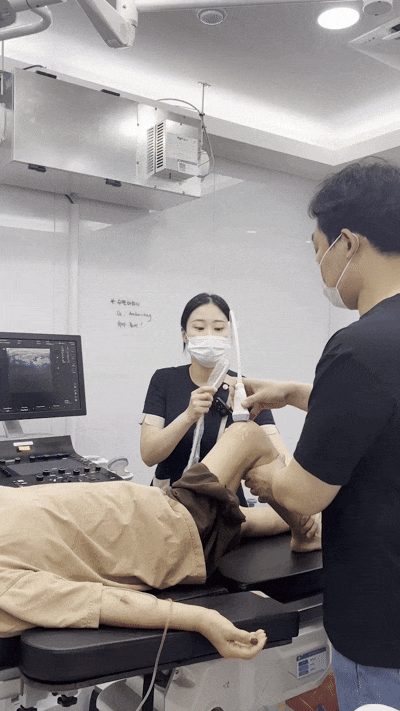
Knee osteoarthritis is the thickest. The 2023 BMJ network meta-analysis analyzed data from 35 trials and 3,104 patients and reported that at the 12-month mark PRP was the best at improving the WOMAC score, which measures pain, function, and stiffness. It consistently ranked at the top compared with steroids, hyaluronic acid, and placebo. In a 2025 BMC Musculoskeletal Disorders systematic review, intra-articular PRP was also superior to hyaluronic acid in both VAS pain and WOMAC. Rather than temporarily suppressing pain the way a steroid does, PRP’s real value lies in sustained recovery through tissue regeneration.
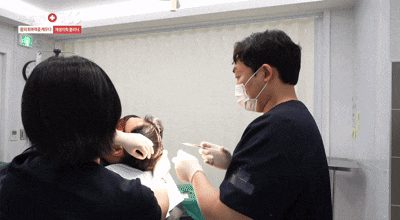
Androgenetic alopecia is second. The 2025 Frontiers in Medicine network meta-analysis pooled 20 studies and reported that the combination of PRP, bFGF, and minoxidil ranked first in treatment efficacy with a SUCRA of 93.06% (Xia Y et al., 2025). The synergy is clearly greater when PRP is combined with minoxidil than when used alone.
Tendinopathy and ligament injury also have relatively thick evidence. PRP is actively used for tennis elbow, rotator cuff tears, Achilles tendinopathy, and more. In a 2025 Scientific Reports randomized controlled trial, VAS pain dropped by 50 mm and the function score improved by 35 points three months after a PRP injection, showing a significant difference versus the saline control group.
Skin regeneration and aesthetics are at an intermediate level. PRP is used for photoaging, acne scars, stretch marks, and the like, and improvement is well reported when it is combined with microneedling or autologous fat grafting. Areas such as chronic wounds are viewed as an adjunct option to standard care.
Intravenous PRP — a new frontier
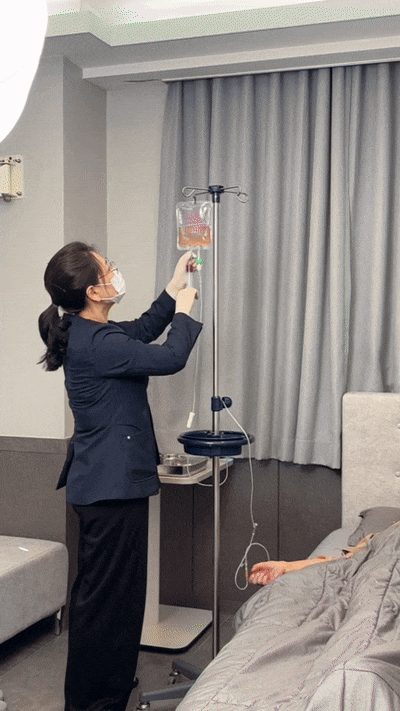
Recently, methods that administer a concentrated autologous platelet preparation intravenously to aim for systemic anti-inflammatory and immune-modulating effects are also being studied. The stage where this possibility emerged most dramatically was the intensive care unit during the COVID-19 pandemic.
The main cause of death in severe COVID-19 patients was acute respiratory distress syndrome driven by a cytokine storm. It is a situation where the patient’s own excessive inflammatory response, rather than the virus, destroys the lungs. What researchers focused on was the anti-inflammatory cytokines contained in PRP. The idea was to take advantage of the fact that platelets secrete not only recovery signals but also messages that calm excessive inflammation.
A phase 1 and 2 clinical trial in an Indonesian intensive care unit (Karina K et al.), published in the International Journal of Inflammation in 2021, administered autologous activated PRP intravenously three times to 10 severe patients. As a result, 9 of the 10 recovered and were transferred to a general ward, CRP — a marker of systemic inflammation — decreased significantly, and lymphocyte counts also shifted toward a restored immune balance. There were no serious adverse effects. Follow-up research even confirmed a reduction in fibrosis-inducing cytokines.
This is an early-stage study with a sample of 10, and large-scale randomized controlled trials are needed. Still, the message this study delivered is clear: platelets can be a tool for systemic anti-inflammation, not only local regeneration. There is an open possibility of developing into a new option in the fields of chronic inflammation and inflammaging.
What separates the effect is the concentration
The single most important variable that determines PRP’s clinical effect is the platelet concentration. Even under the same name “PRP,” clinical data clearly proves that the strength of the action changes completely depending on the concentration.
The US FDA defines PRP simply as 250,000/μL of platelets or more. This means that even a level similar to the platelet concentration of normal blood can technically be called PRP. Yet to produce a consistent clinical effect in regenerative-medicine research, a far higher concentration is needed. Studies regard around 1 million/μL as the baseline for clinical effect.
The same name doesn’t make it the same treatment. With PRP, concentration is what creates the action.
Some people tell me they had PRP but it didn’t work. In that case, rather than doubting the procedure itself, I first ask about the concentration and the number of sessions. Most have no record or don’t know. The point where results diverge lies not in the name but in the numbers.
In what order should you approach this?
PRP is the starting point of autologous regenerative medicine. If you have mild to moderate knee arthritis, early-stage hair loss, or chronic tendinopathy, it is reasonable to start here. The procedural burden is the lightest and the evidence is the thickest.
If the effect was short even after proceeding with a proper protocol, that’s when we look at the next step. If growth factors alone are not enough, BMAC or SVF — which inject the stem cells themselves — become the next option. Conversely, deciding after a single session that it doesn’t work is too early. The standard is repeated procedures, and in the knee, ultrasound-guided accuracy greatly influences the result.