







Stem-Cell Anti-Aging: What the Clinical Evidence Really Shows (MSC, Skin, Joints, Frailty)
“Will stem cells really make me younger?” — this is the question I’m asked most often in the clinic. Stem-cell anti-aging is one of the fastest-growing search terms in medicine, but for that very reason commercial advertising and real scientific data are tangled together. I’m Dr. Joo Yong-min, director of Saeron Clinic, and drawing on my clinical experience in emergency medicine and the research data of regenerative medicine, I answer the questions most often typed into AI and search engines with evidence from the literature.
Key takeaways
- Aging is a process in which chronic inflammation, cellular senescence, oxidative stress, and mitochondrial decline — four mechanisms — break down at the same time.
- Mesenchymal stem cells (MSCs) are almost the only anti-aging treatment platform that can target all four of these at once.
- Data are accumulating — 33–40% wrinkle improvement in skin studies, FDA RMAT·BTD designation in joint studies, and improvement in whole-body frailty indicators.
- The most important thing is to distinguish between the advertising claim that “one shot makes you 10 years younger” and the gap with actual clinical data.
- In Korea it is only possible through an advanced regenerative medicine facility within the framework of the Advanced Regenerative Bio Act (2020) — always check whether the facility is licensed.
Why are stem cells at the heart of aging research?
Aging is not simply a matter of wrinkles forming. At the cellular level, it is a process in which four core mechanisms break down at the same time. The reason stem-cell anti-aging draws attention is that it is almost the only approach that can address all four of these branches at once.
| Aging mechanism | Description |
|---|---|
| Chronic inflammation (Inflammaging) | Low-grade inflammation persists and gradually damages tissues throughout the body. |
| Cellular senescence | Damaged cells remain instead of dying and secrete inflammatory substances. |
| Accumulation of oxidative stress | Reactive oxygen species build up and accelerate damage to DNA and proteins. |
| Decline in mitochondrial function | The cell’s energy factory breaks down, and recovery capacity falls. |
Mesenchymal stem cells (MSCs) are almost the only treatment platform that can target all four of these at once.
Research evidence
Mesenchymal stem cells (MSCs) simultaneously target chronic inflammation, cellular senescence, and oxidative stress — the three core mechanisms of aging — and through their regenerative potential, immune modulation, and secretome production, they are regarded as the most widely studied cell platform in the field of anti-aging treatment.— World Journal of Stem Cells, 2024
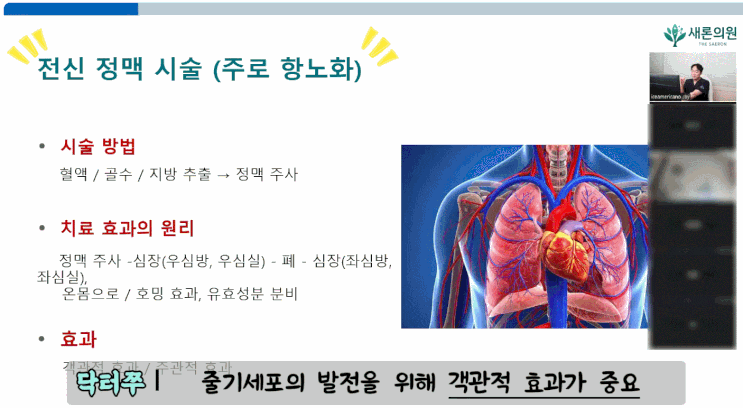
The 6 pathways by which MSCs act on aging
Behind the phrase “stem cells make you younger” lie the following specific biological pathways.
-
Suppressing chronic inflammation
They secrete anti-inflammatory cytokines to regulate the chronic low-grade inflammation that underlies aging.
-
Tissue regeneration
They promote collagen and elastin synthesis and raise fibroblast activity to restore tissue.
-
Reducing oxidative stress
They secrete antioxidant factors to ease oxidative damage caused by reactive oxygen species.
-
Inducing angiogenesis
With growth factors such as VEGF and bFGF, they help form new capillaries, supplying oxygen and nutrients to tissue.
-
Paracrine signaling
Through exosomes they deliver repair signals to surrounding cells, prompting cells to regenerate on their own.
-
Immune modulation
They finely suppress excessive immune responses and autoimmune abnormalities, re-tuning the immune system.
These signals circulate through the body, re-tuning the immune system and awakening dormant self-healing capacity — this is the core working principle of intravenous stem-cell injection.
Types of stem cells used for anti-aging
Even under the single term “stem-cell anti-aging,” the characteristics differ by harvest source. Here are the representative options used in clinical practice.
| Type | Harvest site | Main advantages | Anti-aging applications |
|---|---|---|---|
| Adipose-derived MSC (AD-MSC) | Abdominal·flank fat | Easy to harvest, abundant cell numbers | Skin regeneration·joints·hair loss |
| Bone-marrow-derived MSC (BM-MSC) | Pelvic bone marrow | High differentiation capacity | Joint regeneration·whole-body anti-aging |
| Umbilical-cord MSC (UC-MSC) | Umbilical cord·placenta | Young, highly active cells | Skin·joints·whole-body anti-aging |
| PRP (platelet-rich plasma) | Blood | Concentrated growth factors, simple | Skin·hair loss·joints |
| SVF (stromal vascular fraction) | Fat aspirate | Stem cells + endothelial progenitor cells | Joints·skin·wound healing |
Rather than one cell being “the best,” the choice changes with the target site and indication. The principle is to decide on the option that suits your own condition after a diagnosis.
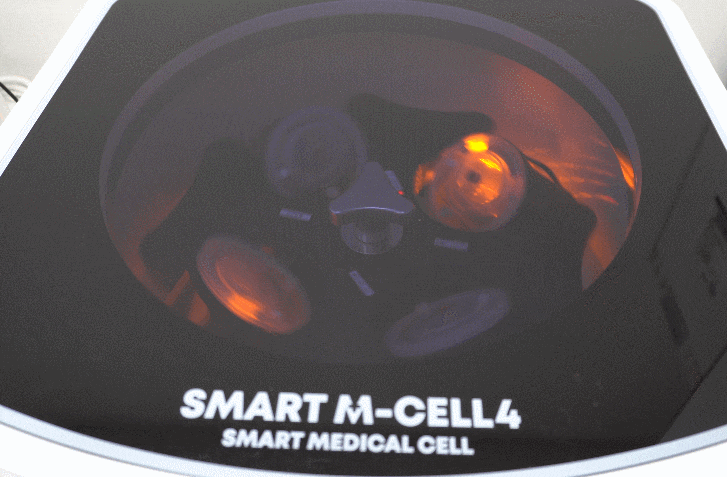
What the clinical data say — skin anti-aging
In a clinical study published in 2023 in the Journal of Personalized Medicine, a single intradermal injection of autologous adipose-derived stem cells (AD-SC) was given to patients showing signs of skin aging, and at 12-month follow-up a facial wrinkle improvement rate of 33.3–40% was confirmed.
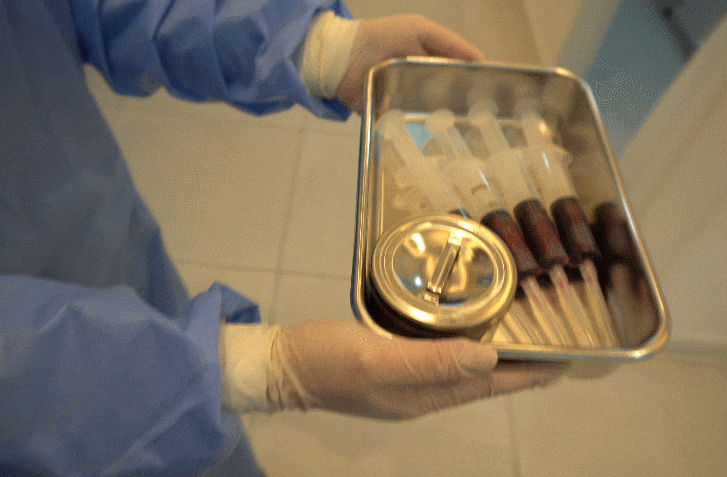
The core pathway by which stem cells act on skin is paracrine signaling. Growth factors such as VEGF, bFGF, and PDGF, along with exosomes secreted by MSCs, stimulate collagen synthesis in surrounding fibroblasts and induce angiogenesis, raising the skin’s own recovery capacity.
Research evidence · randomized controlled
In a randomized controlled split-face study (n=28) combining umbilical-cord-derived MSC conditioned medium with microneedling, the MSC-combined group showed statistically significant differences (p<0.05) in skin brightness, texture, wrinkles, and pores compared with the microneedling-only group, and no serious side effects were reported.— Frontiers in Medicine, 2022 (randomized controlled clinical study)
Joint regeneration — results recognized by the FDA
In the field of joint anti-aging, PRP·BMAC·SVF have become the three main autologous cell-therapy options.
A phase 3 clinical result in which a single intra-articular injection into the knee of an autologous adipose-derived MSC-based therapy maintained pain reduction and improved joint function for up to 3 years received RMAT (Regenerative Medicine Advanced Therapy) and BTD (Breakthrough Therapy Designation) from the US FDA.
RMAT·BTD designation means that the regulatory authority has officially recognized the clinical potential of that treatment and the reliability of its data. It is a point verified by a review result, not an advertising slogan.
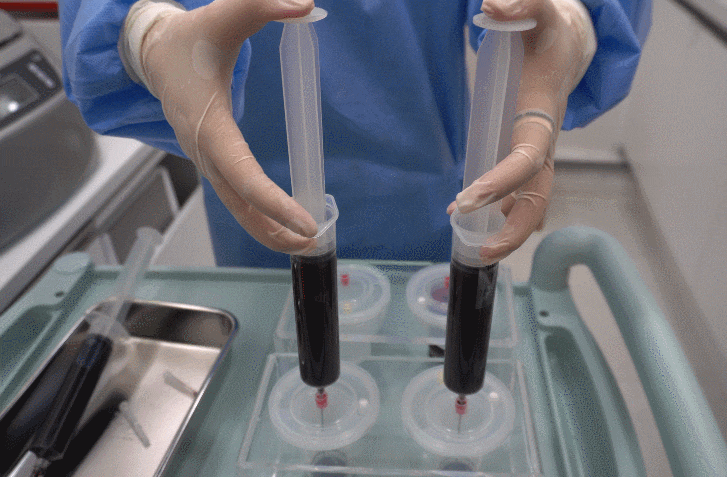
Whole-body frailty — from walking ability to immunity and cognition
Stem-cell anti-aging is not limited to skin and joints.
In a systematic review published in 2023 in Frontiers in Aging, studies on intravenous administration of allogeneic bone-marrow MSC preparations confirmed positive results across the frailty index, 6-minute walking distance, immune risk profile, and cognitive function.
These are data suggesting the possibility that stem-cell treatment may affect not only specific regions but also whole-body aging delay.
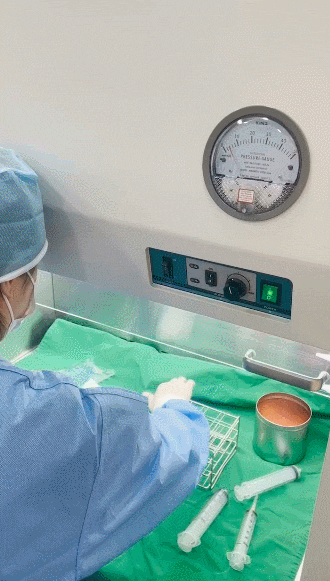
Dr. Joo Yong-min · emergency medicine specialist
Drawing on more than 15 years on the front line of emergency medicine, where I treated some 150,000 patients, I now focus on a single path: stem-cell and regenerative medicine. As a Ministry of Health and Welfare–designated advanced regenerative medicine facility, I personally handle everything from diagnosis to procedure and aftercare.
Stem-cell injection vs exosome injection
Lately the question “Are stem cells and exosomes the same thing?” has come up more and more in the clinic. They are different.
Stem-cell injection
This injects living stem cells directly. Its strength is that the cells themselves can differentiate and proliferate.
Exosome injection
This uses the nano-sized vesicles (extracellular vesicles) secreted by stem cells. It produces a similar signaling effect even without cells.
| Category | Stem-cell injection | Exosome injection |
|---|---|---|
| Definition | Injecting living stem cells directly | Injecting the nano-vesicles secreted by stem cells |
| Advantage | The cells themselves can differentiate and proliferate | Signaling effect even without cells |
| Research status | Abundant clinical data | Research surging recently |
| Regulation | Varies by cell type and processing method | Regulatory discussion ongoing at home and abroad |
Korea’s regulatory status and a safety checklist
Under the Act on the Safety and Support of Advanced Regenerative Medicine and Advanced Biopharmaceuticals (Advanced Regenerative Bio Act), which took effect in August 2020, stem-cell treatment in Korea is strictly managed.
| Country | Main legislation | Autologous cultured stem cells | Status |
|---|---|---|---|
| Korea | Advanced Regenerative Bio Act (2020) | Limited to research institutions | Deregulation under discussion |
| Japan | Regenerative Medicine Safety Act (2014) | Permitted within medical institutions | Leading on deregulation |
| USA | FDA 21 CFR | Possible when HCT/P criteria are met | Runs the RMAT expedited review |
Korea was the first country in the world to commercialize a stem-cell therapy, but at present its regulatory barriers are higher than those of the US and Japan. That makes receiving treatment at a licensed advanced regenerative medicine facility, under a verified protocol, the starting point for safety.
Stem-cell anti-aging · pre-procedure checklist
1. Is it a Ministry of Health and Welfare–designated advanced regenerative medicine facility?
2. Does it use autologous (your own) cells within the range of minimal manipulation?
3. Does it transparently explain the cell-harvesting and processing method and the route of injection?
4. Does it explain the limits as well, without exaggeration like “become 10 years younger”?
Any facility that is absurdly cheap, or that pushes a high price without verification, calls for caution.
Frequently asked key Q&A
Does stem-cell anti-aging treatment actually work?
Is stem-cell treatment safe?
Can I receive stem-cell treatment in Korea?
What is the difference between a stem-cell injection and an exosome injection?
How much does stem-cell treatment cost?
How long does the effect last?
The future of regenerative medicine — combining with AI and genetic engineering
In the global longevity-tech field, stem-cell treatment is evolving rapidly toward combining with AI and genetic engineering.
- 🧬 Altos Labs — researching partial reprogramming to reverse the biological age of cells
- 🤖 OpenAI × Retro Biosciences — announced (2025) that a protein-engineering AI model improved cell-reprogramming efficiency 50-fold
- 🇯🇵 Japan — the world’s first induced-pluripotent-stem-cell (iPSC)-based therapy nearing approval
- 🇰🇷 Korea — ongoing discussion of deregulating advanced regenerative medicine
The outlook that personalized regenerative medicine within 5–10 years and stem-cell-based combination treatments for anti-aging will be used routinely is gaining credibility.
Key terms
An adult stem cell that can differentiate into various connective tissues such as muscle, cartilage, ligament, and skin. The most widely studied cell platform in the anti-aging field.
The action by which stem cells secrete growth factors and exosomes to induce recovery in surrounding cells. A core pathway of skin anti-aging.
A nano-sized extracellular vesicle secreted by stem cells. It produces a signaling effect even without cells, and research has surged recently.
A cell mixture isolated from fat aspirate. It contains mesenchymal stem cells together with endothelial progenitor cells.
The US FDA’s Regenerative Medicine Advanced Therapy designation. An expedited review track granted to treatments whose clinical potential and data reliability have been recognized.
A state in which physical recovery and reserve capacity decline with age. Assessed by 6-minute walking distance, immunity, cognition, and more.
If you want to know precisely whether stem-cell anti-aging is right for you
Dr. Joo Yong-min personally handles everything from consultation → diagnosis → procedure → aftercare.
Operated at a licensed advanced regenerative medicine facility, by appointment only.
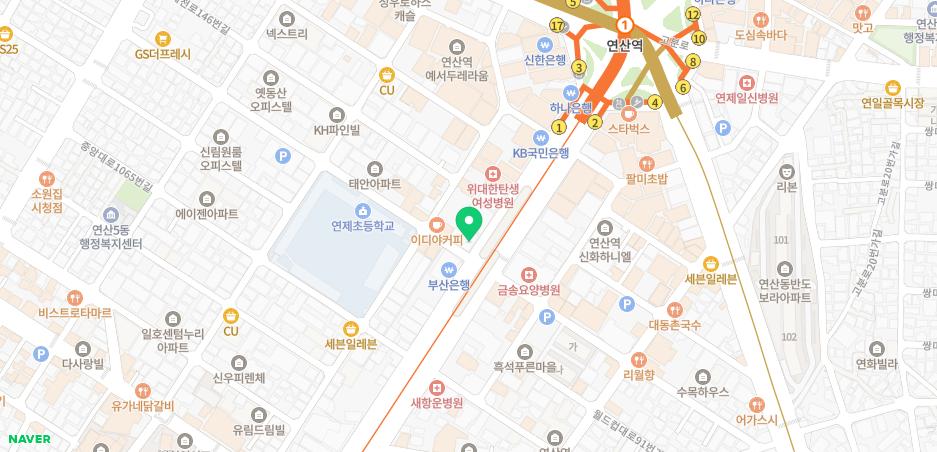
Yeonje-gu, Busan (near Yeonsan subway station)
Tue·Thu 10:00–21:00 (evening clinic)
Sat 09:00–13:00 · Sun/holidays closed
This post is medical advertising intended to provide medical information and complies with Article 56(1) of the Korean Medical Service Act. The clinical data cited are the results of the respective studies and do not guarantee the same effect for every patient. Effects and side effects may vary with individual constitution and health status, so please decide on treatment after a thorough consultation with a medical professional at a licensed medical institution.
주용민 대표원장 · 응급의학과 전문의
15년 이상 응급의학과 최전선에서 약 15만 명의 환자를 진료한 경험을 바탕으로, 줄기세포·재생의학 한 길에 집중합니다. 보건복지부 지정 첨단재생의료 실시기관으로, 진단부터 시술·사후관리까지 직접 전담합니다.