






What is NAD IV therapy?
NAD IV therapy directly replenishes NAD — a molecule your cells use to produce energy and repair DNA — through an intravenous drip. In other words, it tops up a part the cell’s energy engine needs to run.
NAD levels are known to fall with age and with sustained fatigue or overwork. Replenishing it can help with mental fatigue, focus, and cellular regeneration, and for the right patients I consider it a meaningful treatment.
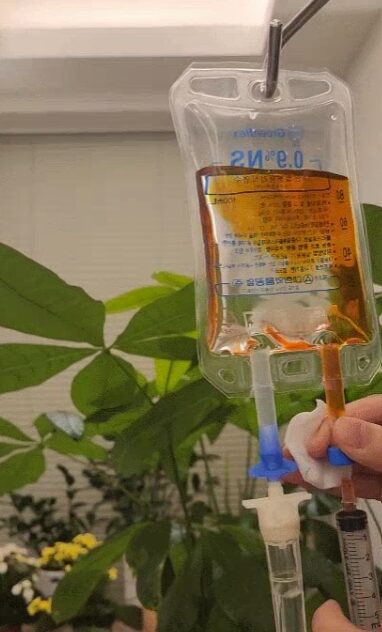
It’s a good treatment — so why not give it right away?
Every treatment follows an assessment of the patient’s situation and state. The patient I mentioned looked healthy, but years of accumulated tension had left his body’s energy system substantially depleted.

Liver function, kidney function, blood sugar, and inflammation (CRP) were all fine, and his NK cell activity was sufficient. But one thing stood out: his vitamin D was 15.6 ng/mL — a deficient level. Vitamin D isn’t just a bone nutrient; it’s involved in immune and inflammatory regulation and cellular function, and some research links it to stem cell function.
For years this patient had scaled a business fast and never really rested. His sleep quality had dropped and chronic tension had lasted a long time. He looked healthy on the outside, but his body’s energy system was substantially depleted, and his blood work was mostly within normal range. One thing stood out — vitamin D at 15.6 ng/mL, a deficient level. So that day I gave a different IV instead and re-set the order.
Why I don’t use NAD right away in a burnout state
A burned-out body is often not simply “low on energy.” After a long stretch of sympathetic overdrive and overload, it’s closer to being already overheated.
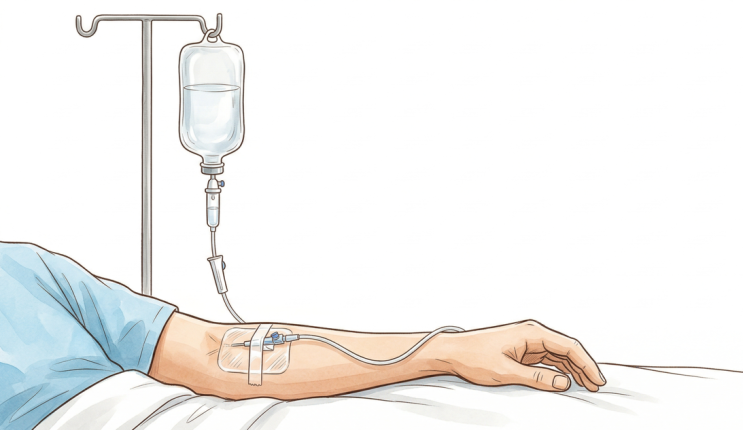
In these patients, ramping cellular energy metabolism up hard with an NAD drip can, in some cases, cause palpitations, heightened tension, or even disrupted sleep. That’s why the order matters.
Settle the environment first, then raise the energy — the sequence changes the response.How do stem cell treatment and NAD IV differ?
Both come up in regenerative and anti-aging medicine, but they act in different directions and stages. Stem cell treatment is closer to changing the body’s environment; an NAD drip helps an already-settled environment run its energy engine better.

| Aspect | Stem cell treatment | NAD IV therapy |
|---|---|---|
| Core role | Settles the body’s environment | Activates cellular energy metabolism |
| Mechanism | Inflammatory signaling, immune balance, microenvironment repair | Runs the energy engine (metabolism) better |
| Best stage | Early, when the environment is disturbed | After the environment is reasonably settled |
| Analogy | Reconditioning the soil | Speeding up growth in well-prepared soil |
So treatment has an order
For this patient, the right call was to settle the inflammatory and immune environment with stem cell treatment first, allow a recovery window, then support cellular energy recovery with NAD. Not “this treatment is good, so let’s do it,” but which order fits your body’s current state — that’s what I’d put first.
If you have questions, reach out anytime. I’ll check your state first and give you an honest read.