







What’s left once you strip away the nickname?
Most of what are called anti-aging IV drips in Korea come with a familiar nickname. Names like Baekok (whitening), Cinderella, and garlic raise expectations all on their own. But if you also know the actual pharmacological ingredient behind them and the indications the Ministry of Food and Drug Safety has approved, your choice changes.
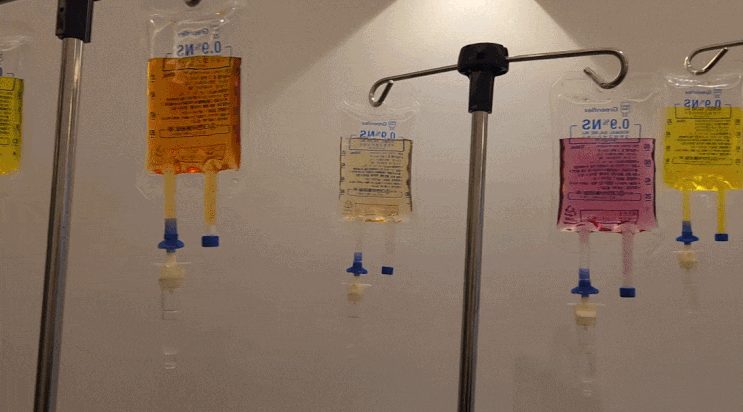
The main ingredient of the whitening (Baekok) injection is glutathione, and its approved indications from the Ministry of Food and Drug Safety are improving liver function and preventing anticancer-drug side effects. The mechanisms people hope for are neutralizing free radicals and suppressing melanin synthesis. The Cinderella injection is alpha-lipoic acid, whose approved indication is diabetic polyneuropathy, with antioxidant and energy-metabolism-promoting effects expected. The garlic injection is fursultiamine, a vitamin B1 derivative, whose approved indication is vitamin B1 deficiency. High-dose vitamin C leans toward collagen synthesis, antioxidant action, and immune modulation.
Here’s the key point. The approved indications for these IV drips do not include anti-aging or skin whitening. Prescribing them off-label in clinics is the reality, and it’s also common in medical practice. That said, getting an injection while knowing what each ingredient actually does in your body is different from getting one without knowing.
The whitening (Baekok) injection — does it really make skin fairer?
Glutathione is a tripeptide made of three amino acids — glycine, cysteine, and glutamic acid — and is the most powerful endogenous antioxidant the human body synthesizes on its own. It not only neutralizes free radicals directly but also acts as a master antioxidant, helping other antioxidants such as vitamin C and vitamin E get recycled after they’ve been used.
The name “Baekok” (white jade) isn’t attached for nothing. Glutathione is known to suppress the production of eumelanin, the darker pigment, in the melanin synthesis pathway, and to shift things toward pheomelanin, the lighter pigment. A small clinical study conducted in Southeast Asia also reported that skin brightness improved compared with placebo (Watanabe et al., Clin Cosmet Investig Dermatol, 2014).
However, this change is closer to something temporary that gradually reverts once you stop the injections, and the Ministry of Food and Drug Safety does not recognize skin whitening as an official indication either. Rather than overly high expectations, it’s more appropriate to understand it as a secondary benefit.

It’s also worth knowing that the body’s glutathione synthesis declines with age. In one study, adults aged 60 to 80 had a roughly 50% lower synthesis rate than young adults, and supplementing with precursors restored synthesis while also improving oxidative-stress markers (Sekhar et al., J Clin Endocrinol Metab, 2011).
So would injecting it directly solve the problem? Glutathione given intravenously has a fairly short blood half-life. Many people feel their condition improve or their skin tone brighten right after receiving it, and that felt effect is real. Whether this temporary effect translates directly into sustained anti-aging at the cellular level, though, is a separate matter.
What does the alpha-lipoic acid in the Cinderella injection do?
Alpha-lipoic acid is a unique antioxidant that works in both water-soluble and fat-soluble environments. It takes part in energy production in the cell’s mitochondria and also helps regenerate glutathione. The name is said to come from how, after receiving it, your face brightens and your body feels lighter — like Cinderella transformed before the ball.
Alpha-lipoic acid is an ingredient with medical evidence, used to the point of treating diabetic neuropathy. That said, the studies that showed body-fat-reducing effects were mostly protocols of oral administration continued for 12 weeks or more. It’s hard to expect the same effect from a one-time IV drip, and high-dose intravenous administration can cause hypoglycemia or gastrointestinal discomfort, so dose adjustment is needed.
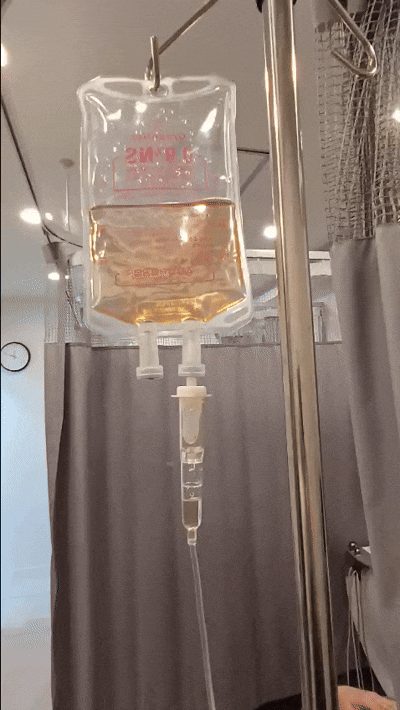
Fatigue recovery and anti-aging are different
This distinction is what I most want to point out in today’s post. Fatigue recovery targets a temporary shortage of energy and electrolytes and is felt within a few hours after the IV drip. Anti-aging, on the other hand, targets the accumulation of cellular damage, telomere shortening, and chronic inflammation, and its changes are seen over months to years. The measured indicators differ too. The former is subjective condition and fluid balance; the latter is inflammatory markers such as hs-CRP or IL-6 and oxidative-stress indicators.
If fatigue recovery is a fast charge for a smartphone, anti-aging is closer to replacing the battery itself.
Popular IV drips such as glutathione, alpha-lipoic acid, and vitamin B complex are on the fast-charge side. They supply cofactors for energy metabolism or temporarily neutralize free radicals; they don’t intervene in the underlying mechanisms by which cells age.
So is there such a thing as a true anti-aging IV drip? Modern aging research defines aging by several hallmarks such as declining mitochondrial function, cellular senescence, stem-cell exhaustion, and chronic inflammation. If an IV drip meaningfully improved even one of these, it could be called anti-aging — but at present most IV drips do not meet this bar.
Three things to check before choosing an IV drip
That doesn’t mean IV drips are meaningless. What matters is the eye to choose the drip that fits you. Here are three things I’ve put together over 18 years of prescribing IV drips in emergency rooms and regenerative-medicine practice.
First, pre-IV testing. No matter how good an ingredient is, if you don’t know what your body currently lacks, efficiency drops. It’s advisable to check not only a basic blood test but also hs-CRP, homocysteine, and ferritin to gauge chronic inflammation. Recently, approaches such as a urine organic-acid test to spot bottlenecks in mitochondrial energy metabolism, or a hair mineral test to check heavy-metal accumulation patterns, are also used. Depending on the test results, vitamin C is the priority for some, while B-group vitamins are more urgent than glutathione for others.
Second, the ingredient combination and dose. High-dose vitamin C and glutathione are often given together, but without considering their interaction and ratio, efficiency can actually drop. Vitamin C is known to act transiently as a pro-oxidant at pharmacological high doses (Chen et al., PNAS, 2008), which can conflict with glutathione’s antioxidant mechanism. Alpha-lipoic acid has a metal-chelation effect and may promote the excretion of essential minerals such as zinc and copper.
Third, an IV drip is a start, not an end. An IV drip plays the role of temporarily supporting the body’s antioxidant system. Only when you advance to the stage of fundamentally managing chronic inflammation and restoring the cells’ own regenerative capacity can it finally be called anti-aging.
When someone says, “Just give me a whitening (Baekok) injection,” I ask first: whether they’ve had a blood test recently, and what discomfort brought them in. An IV drip chosen from a menu and one chosen from data show a difference a few months later.