







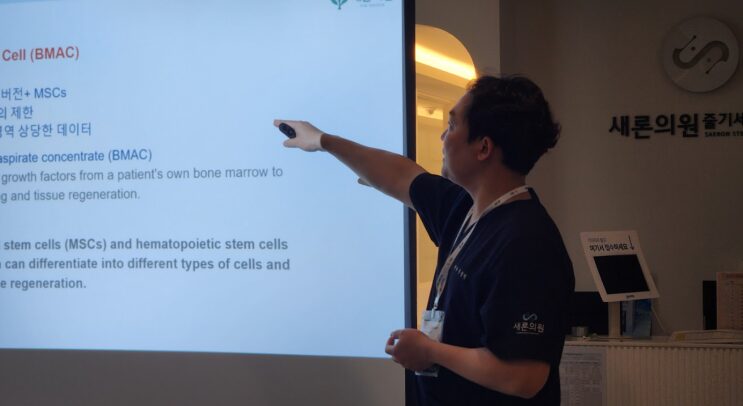
Did You Know There Are Three Types of Stem Cell Injection?
When a clinic says “stem cell injection,” it sounds like one thing. But the source material is actually completely different.
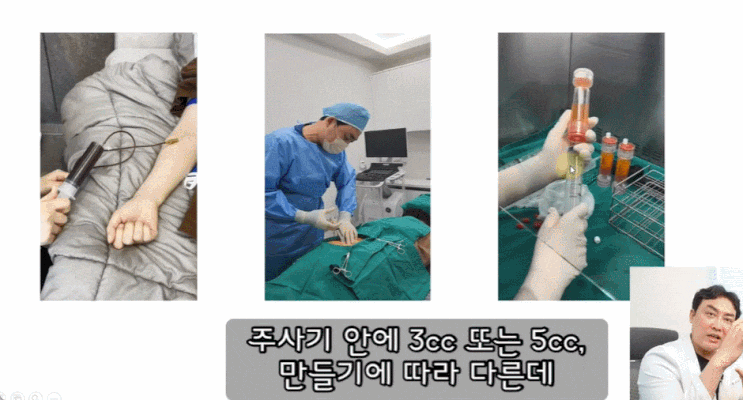
- PRP — drawn from your blood
- BMAC — drawn from your pelvic bone marrow
- SVF — drawn from your abdominal fat
All three use your own cells — autologous treatment — but the components inside are different, and so are the strengths.
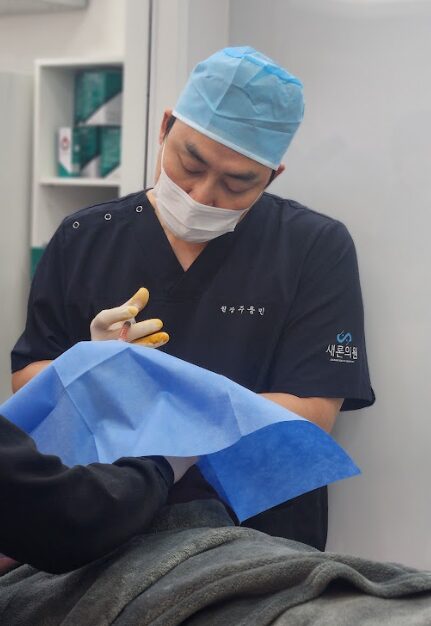
① PRP — The Entry-Level Regenerative Injection
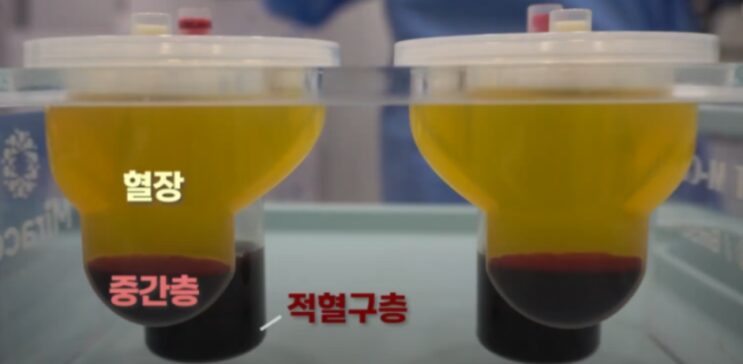
PRP is centered on growth factors. It contains almost no stem cells, but it’s effective at calming inflammation inside the joint and reducing pain. It’s the simplest, lowest-burden option — think of it as the starting point of regenerative injections.
② BMAC — The Bone Marrow Concentrate Package
BMAC is a bone marrow aspirate concentrate. It’s a comprehensive package containing mesenchymal stem cells, immune-regulatory cells, and growth factors all in one. It has strong anti-inflammatory effects, and some clinical studies have shown positive effects on maintaining cartilage thickness on MRI.
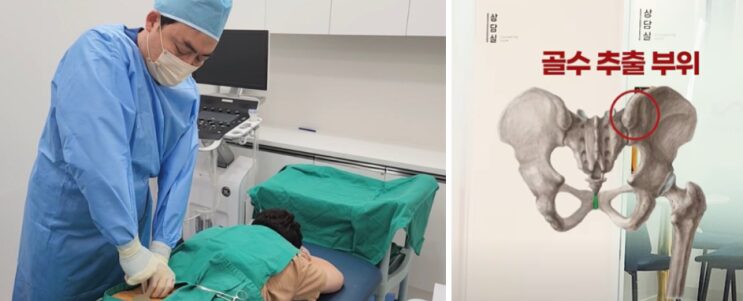
Many patients are nervous about the bone marrow harvest, but in practice it’s done under local anesthesia — a small aspiration from the pelvic bone with a relatively quick recovery.
③ SVF — The Highest Regenerative Potential
SVF is a stem cell extract derived from fat. Of the three options, it contains the highest concentration of mesenchymal stem cells and offers the greatest regenerative potential. Recent research continues to show that combining SVF with nano-fat further enhances cartilage-protective effects.
| Type | PRP (Blood) | BMAC (Bone Marrow) | SVF (Fat) |
|---|---|---|---|
| Source | Arm vein blood | Pelvic iliac crest | Abdominal fat |
| Stem Cells | Minimal | Moderate | Highest concentration |
| Primary Action | Inflammation control · pain relief | Anti-inflammatory + regenerative balance | Maximum regenerative potential |
| Regulatory Status | — | 2023 New Medical Technology designation | Advanced regenerative medicine institution clinical use |
| Best For | Early stage · pain-focused | Intermediate stage · complex cases | Older patients · high regenerative demand |
Cartilage Does Not Grow Back. I’ll Be Honest With You.
With current technology, fully rebuilding damaged cartilage is not possible. If you go in with the wrong goal, disappointment is inevitable.
Not “your cartilage will grow back” — but “we can slow down how fast your arthritis progresses.” That is the real goal.The real role of stem cell injections is this:
- Slowing down the rate of arthritis progression
- Reducing pain
- Delaying the point at which surgery becomes necessary
- Buying time to do rehabilitation exercises
That might sound like underselling the treatment. But consider this: “A patient in their 60s who was told they needed surgery right away kept walking for two more years through injection therapy and rehabilitation.” That is far from nothing.
What the Best Knee Clinics in Busan Have in Common
When stem cell knee injections received their new medical technology designation, they spread like a trend. Departments with no relevant experience rushed to adopt them — and once insurance reimbursement was blocked, most of those providers disappeared.
I was doing this before the designation, and I still am. Because treatment here is built on data, not trends.
Whether a patient only needs PRP, whether BMAC is the right call, or whether combining with SVF is appropriate — each person is evaluated and advised honestly, every single time.
If you’re searching for the best knee clinic in Busan, find one that explains its limits honestly rather than just telling you yes. That difference determines how your money and time are spent.
all available
documented cases
ER clinical experience
3 Questions to Ask at Your Consultation
The fastest way to identify a truly good knee clinic in Busan is to ask these three questions at your consultation. How they answer tells you everything about the quality of that clinic.
① “Between PRP, BMAC, and SVF — which is right for me?”
Be cautious of a clinic that says “we only offer one type of stem cell injection” or recommends the same thing to every patient regardless of their condition. A proper recommendation should come after reviewing your X-rays, age, pain pattern, and body type.
② “Will my cartilage actually grow back?”
Any clinic that says “yes, absolutely” is not being honest. A trustworthy clinic will say: “Full cartilage regeneration is difficult. But we can slow the progression, reduce pain, and delay the point at which surgery becomes necessary.”
③ “Is there a chance stem cell treatment isn’t right for me?”
A clinic that says “anyone can benefit” is a red flag. Whether they honestly discuss contraindications — KL grade 4, severe leg alignment deformity, active infection — is the real test.
Last month, a man in his late 60s came to Saeron Clinic. He had been told at another hospital that he needed joint replacement surgery, but said: “I just want to make it to my daughter’s wedding.”
His X-ray showed late KL grade 3, with slight varus (O-shaped) leg alignment. I was honest with him: “I can’t guarantee you’ll walk perfectly at the wedding. But with BMAC + PRP combined and rehabilitation, there’s a good chance we can reduce your pain enough to walk a reasonable distance. After six months, we’ll reassess and consider joint replacement at that point.”
At the four-month mark, his pain had decreased significantly and he walked down the aisle at the wedding. He did eventually get joint replacement a year later — but that year meant everything to him.