







Why I explain hair loss as a cracked bowl
When I explain hair-loss treatment, I always use the same analogy: trying to fill water into a cracked bowl. This analogy matters because each treatment plays a clearly distinct role.
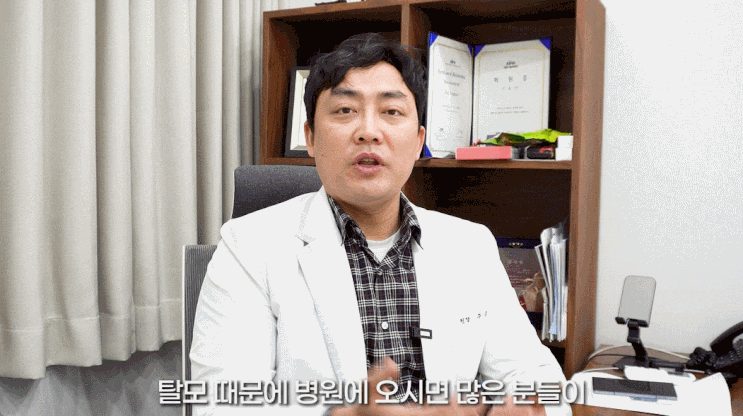
DHT continuously shrinking the follicles is the crack in the bowl, the leaking hole. The treatment that fits here is a DHT inhibitor such as finasteride or dutasteride. The aging and atrophy of the follicles and dermis you still have is the dried-out soil, the emptying bowl. What fits here is a stem-cell scalp injection, PRP, and minoxidil. Scalp blood flow and the microenvironment correspond to the sunlight and ventilation of the spot where you place a flowerpot, and lifestyle and scalp care come in here.

Plug only the hole and the bowl stays empty; pour only the water and it keeps leaking out. You have to do both for real recovery to begin.
Male- and female-pattern hair loss — that is, androgenetic alopecia — is a progressive condition in which DHT keeps shrinking the follicles. That’s why, in every hair-loss treatment that exists today, the most important thing is plugging the hole. Stem cells work alongside it, taking on the job of filling the water and reviving the soil.
How does a stem-cell scalp injection work?
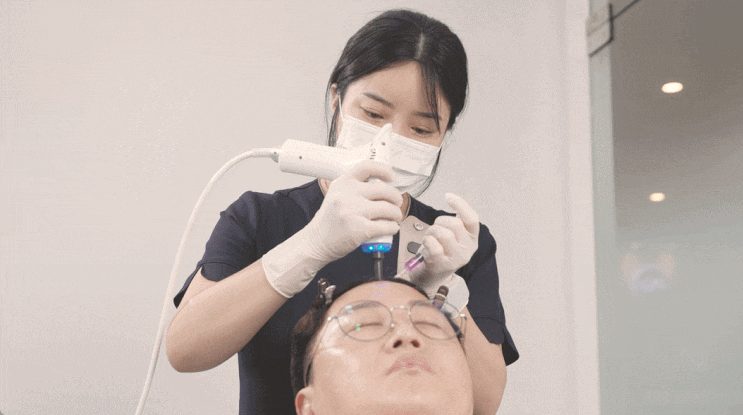
Stem-cell treatment isn’t the kind of treatment where you simply spray something good onto the scalp. It directly touches the core switches of follicle biology.
First, it turns the Wnt signaling pathway back on. Follicles cycle through anagen (growth), catagen (regression), and telogen (rest); as hair loss progresses, the resting phase lengthens and the growth phase shortens. The master switch that restarts this cycle is the Wnt/β-catenin signaling pathway, and DHT suppressing this pathway is the core pathophysiology of androgenetic alopecia. Adipose-derived stem-cell conditioned medium switches follicles from the resting phase to the growth phase through this pathway (Stem Cell Research & Therapy, 2025).
Second, it supplies growth factors. Adipose-derived stem cells are closer to tiny factories that secrete a variety of growth factors. VEGF builds new blood vessels around the follicle to improve nutrient supply, and IGF-1, KGF, and FGF help follicular epithelial cells proliferate. HGF activates dermal papilla cells, and antioxidant enzymes such as SOD ease inflammation and aging around the follicle.
Third, it partly offsets DHT’s suppressive action. There is research suggesting that adipose-derived stem-cell exosomes partly antagonize DHT-induced suppression of hair growth (Tang et al., Stem Cells Int, 2023). It can’t plug the hole directly, but you can expect a supporting effect that slightly reduces the size of the hole.
Blood, bone marrow, or fat — which is right?
When people hear “stem cells for hair loss,” many misunderstand it as a single treatment, but the character differs by source.
PRP is drawn from blood. Strictly speaking it isn’t stem cells but is growth-factor-centered; since it only requires a blood draw, the burden is lowest and the evidence is thickest. It sits in the role of a first-line adjunctive therapy. BMAC is drawn from bone marrow. It contains mesenchymal stem cells and has a high concentration of growth factors, so it’s used when deeper regeneration is needed. SVF and adipose-derived stem cells are drawn from fat. They are rich in mesenchymal stem cells with a very high concentration of growth factors, so they’re used for high-level regeneration or refractory cases. Exosomes and conditioned medium are cell-free secretions, so there’s no harvesting burden, and they’re used mainly for maintenance and as boosters.
So rather than “which one is best?”, the right question is “what fits the state of my bowl?” You have to design the combination by weighing your stage of hair loss, age, past treatment history, budget, and recovery time together.
You have to look at the evidence and the regulatory reality together
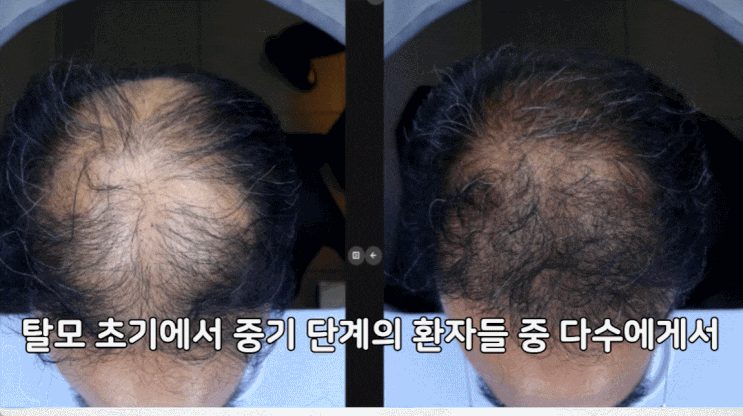
A systematic review of 12 RCTs (Gasteratos et al.) published in Plastic and Reconstructive Surgery Global Open in 2024 concluded that it is safe and effective for hair regrowth and density improvement in androgenetic alopecia patients. That same year, an RCT of 50 patients with progressive androgenetic alopecia (Gan et al.) found follicular mesenchymal stem cells to be effective, and a hair diameter of 60 micrometers was proposed as a key marker for predicting treatment effect. A 2025 meta-analysis likewise found a significant increase in hair density and thickness.
At the same time, there is something you absolutely must be aware of. In April 2024 the FDA warned that the stem-cell and exosome hair-loss products currently on sale are still unapproved, investigational biologics. Marketing along the lines of “get a stem-cell injection and you’ll be cured and can stop your medication for life” is an overstatement. A proper medical institution first sets expectations based on evidence and designs the treatment together with a DHT inhibitor.
There are people who received a stem-cell injection, stopped their medication, and come back half a year later. The follicles that had been reviving have shrunk again. I bring this up first, at the very first consultation. It isn’t that I want to lower your expectations — it’s that results only remain if you keep the right order.
What to check before starting treatment
First comes diagnosing my type of hair loss. Androgenetic, alopecia areata, telogen, and scarring alopecia have completely different treatment strategies. Next, we assess whether you’re in a state where a DHT inhibitor can be used. Men use finasteride or dutasteride, while use is limited in women.
When choosing a clinic, check whether it’s a protocol that specifies the source, the processing method, the number of doses, and the interval, and it’s better to avoid places that promise a one-time cure. Whether it is a designated advanced regenerative medicine facility is also worth considering. Designation itself is not the criterion for whether treatment is possible, but it helps in judging whether a place meets the facility and staffing requirements.