







Genetic hair loss begins with signs like these
Androgenetic hair loss is a type in which follicles genetically programmed to respond to male hormones gradually grow thinner and shorter and eventually disappear. It is also called male-pattern hair loss, but it appears in women too, and it is the most common type of hair loss overall.

The following five are the representative signs: hair grows thinner rather than falling out; the hairline or crown gradually looks emptier; there is a similar pattern in the family; the back and sides of the head stay relatively unaffected; and it progresses very slowly over months to years.
In the clinic, many people come in during their late 20s to early 30s saying, “The amount I shed when washing is about the same, but my crown looks emptier.” This is exactly the typical early sign of thinning progressing rather than shedding.
The genetic influence is larger than people expect. In two separate twin studies, the heritability of androgenetic hair loss was estimated at about 80% (Nyholt et al., J Invest Dermatol, 2003; Rexbye et al., J Gerontol, 2005). However, because it works in a polygenic way, with several genes acting together rather than a single gene, you need to look at both parents’ families to get an accurate picture.
The real culprit is DHT
DHT is a far more powerful form of male hormone created when testosterone meets 5-alpha-reductase. When the testosterone in our body meets this enzyme in the scalp, it transforms into a form that binds to the follicle much more strongly. DHT is known to bind to the androgen receptor about 5 times more strongly than testosterone.

So what exactly does DHT do? Beneath the root where hair grows, there is a command-center-like cell called the dermal papilla. When DHT binds to this cell’s receptor, it progressively shortens the growth phase in which hair grows. As a result, hair falls out before it can fully grow, and the new hair that comes in also grows thinner and shorter. This process is called follicular miniaturization, and when it repeats, eventually not even fine vellus hair grows.
Hair loss is not a disease of falling out all at once, but a process in which the follicles gradually thin.
Why do only the crown and hairline thin?
I’m asked very often, “It’s hair from the same body, so why do only the crown and hairline thin while the back stays fine?” The answer is that each follicle is programmed with a different sensitivity to DHT.
The follicles of the hairline and crown are set with dense, highly sensitive androgen receptors that detect DHT, so they miniaturize easily. The follicles at the back and sides of the head, on the other hand, are set to respond poorly to DHT, so they often survive to the end. This is exactly why hair transplants work. Even when a DHT-resistant follicle from the back of the head is moved and implanted at the front, that follicle keeps its original character, so it holds up well in its new location.
Where does this sensitivity come from? The key is the AR gene, which makes the androgen receptor. This gene is on the X chromosome, so it is known to be strongly influenced by the mother’s side, and it is regarded as the most definitive genetic factor determining early hair loss (Hillmer et al., Am J Hum Genet, 2005). That is why two people with similar blood DHT levels can have completely different hair-loss progression.
Three acquired factors that speed up progression
Acquired factors are not the root cause of hair loss, but they can bring forward its rate of progression or its starting point. If genetics and DHT are the engine, the factors below are closer to pouring fuel onto that engine.
First, seborrheic dermatitis. This is a condition in which sebum is produced excessively and a fungus called Malassezia, which lives off that oil, increases, causing inflammation such as redness, dandruff, and itching. On a scalp where genetic hair loss is progressing, it has been reported that micro-inflammation often accompanies the follicles even when it isn’t visible on the surface (Mahé et al., Int J Dermatol, 2000). When the inflammation of seborrheic dermatitis is added on top of this, the burden on the follicles grows. There is, however, a point to distinguish. Hair shedding caused by seborrheic dermatitis itself is usually temporary and largely recovers once the inflammation is controlled. Seborrheic dermatitis does not permanently eliminate follicles. Left untreated, it merely reveals already-progressing genetic hair loss sooner.
Second, smoking. In an analysis combining several observational studies, people who had ever smoked had about a 1.8 times higher risk of developing androgenetic hair loss, and about a 1.3 times higher risk of progressing from a mild stage to a severe one (Gupta et al., J Cosmet Dermatol, 2024). The risk was especially higher at 10 or more cigarettes a day. Cigarette smoke narrows the scalp’s blood vessels, reducing the nutrients reaching the follicles, and increases free radicals, damaging follicle cells. To be honest, studies proving that quitting smoking brings back lost hair are still lacking. Even so, in the sense that it doesn’t speed up progression, quitting smoking clearly has value.
Third, metabolic syndrome and lifestyle. Metabolic problems such as abdominal obesity, high blood sugar, and dyslipidemia are also reported to be related to hair loss. A systematic review found that people with androgenetic hair loss had about a 3.5 times higher risk of also having metabolic syndrome. There is, however, a point not to misunderstand. This is an association in which they tend to appear together, not confirmation that metabolic syndrome directly causes hair loss. Many view the two problems as sharing common roots in male hormones, insulin, and micro-inflammation.
The sooner, the better
The reason timing matters in androgenetic hair loss is clear. Once a follicle has fully miniaturized and disappeared, reviving it is very difficult. Conversely, while it is still at the thinning stage, there is far more room to act.
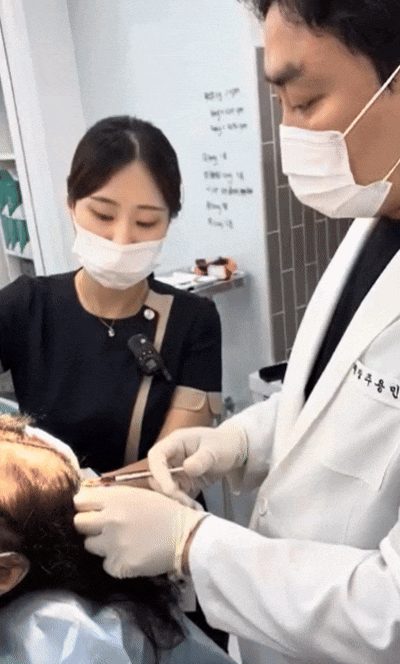
For early detection, it is important to check for thinning rather than shedding. Managing scalp inflammation also matters in that it removes a factor that accelerates progression, so you should not leave seborrheic dermatitis or dandruff untreated. As for lifestyle, improving sleep, quitting smoking, and reducing excessive drinking all affect both the scalp environment and whole-body health.
Some people say, “It still seems fine, so I want to watch it for a while.” But what progresses while you watch is not shedding — it’s thinning. Because it’s a change that’s hard to see, by the time people notice, several years have often already passed.