







ico logo01

보건복지부 지정 첨단재생의료 실시기관
賽隆診所 매거진 미분류

Arthritis Stem Cells? An Honest Breakdown from an Advanced Regenerative Medicine Facility

Hello. I’m Dr. Joo Yong-min, director of Saeron Clinic, an Advanced Regenerative Medicine facility. Meeting patients with knee arthritis in my consultation room, I often hear similar things. “When I went to the hospital, all they said was to have surgery—isn’t there any other way?” The number of people looking into arthritis stem cell treatment because surgery feels like too much has risen sharply. Today, I’ll explain what stem cell treatment actually is — honestly telling you what you can expect, and what you should not expect.

✍️
Author Dr. Joo Yong-min Emergency Medicine Specialist · Principal Investigator, Regenerative Medicine
🏥
Clinic Saeron Clinic Advanced Regenerative Medicine Facility designated by the Ministry of Health and Welfare
⏱️
Read About 6 min An honest breakdown of arthritis stem cells

Arthritis stem cell treatment centers on two options—BMAC harvested from bone marrow and SVF extracted from fat—with PRP combined when needed. Let me be honest: cartilage does not fully regenerate the way it would in someone in their 20s. Because cartilage is a tissue without blood vessels, complete natural regeneration is itself difficult. The goal of stem cell treatment is not “restoration” but “reinforcement”—reducing inflammation at the damaged site, lowering pain, and maintaining joint function. Effects appear at the 3–6 month mark.

The Bottom Line at a Glance
  • Arthritis stem cells center on two options—bone marrow (BMAC) + fat (SVF)—with PRP combined when needed.
  • BMAC was designated a New Health Technology in 2023, and SVF, with its high concentration of mesenchymal stem cells, is advantageous for older patients.
  • Complete cartilage regeneration is difficult. The goal is not “restoration” but “reinforcement”—reducing inflammation, relieving pain, maintaining function.
  • Effects appear at 3–6 months. It is not a procedure that makes pain disappear instantly. If you need fast relief, a different treatment may be a better fit.
  • Stem cells are highly sensitive to temperature and contamination — it’s essential to confirm whether the clinic is an Advanced Regenerative Medicine facility equipped with a sterile environment and dedicated equipment.
Arthritis stem cell treatment — Saeron Clinic
For arthritis stem cells, designing the combination of bone marrow, fat, and PRP is key. It’s not a single procedure but a patient-tailored package.

Where are stem cells drawn from? — Bone marrow vs. fat

Arthritis stem cell treatment has, broadly, two harvest routes: a method that harvests from bone marrow and a method that extracts from fat.

Bone marrow method (BMAC)

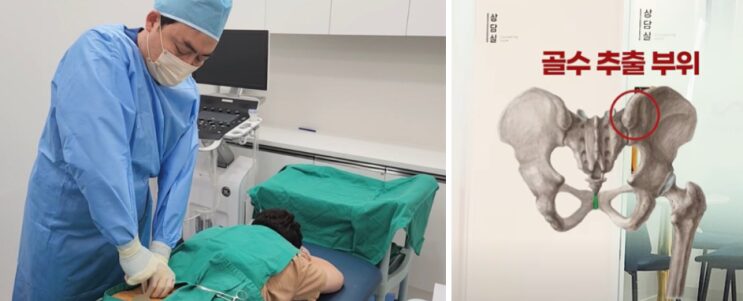
Bone marrow is harvested from the pelvic bone (iliac crest), centrifuged, and then injected into the knee joint. Beyond stem cells, it’s a combination package that also includes growth factors and immunomodulatory cells. It was designated a New Health Technology by the Ministry of Health and Welfare in 2023.

Fat method (SVF)

It’s extracted from abdominal fat. In terms of concentration, it is often more advantageous than bone marrow. That’s because as you age, the stem cell concentration in bone marrow decreases, whereas fat tends to retain its density relatively well. For this reason, there are cases where the fat method is more suitable for older patients.

Rather than one being unconditionally better, it’s right to decide by looking together at the patient’s age, the stage of arthritis progression, and overall systemic condition.

CategoryBone marrow (BMAC)Fat (SVF)
Harvest sitePelvic bone (iliac crest)Abdominal fat
Stem cell concentrationRelatively low, decreases with age100–1,000× that of bone marrow, less affected by age
Components includedMesenchymal stem cells + immunomodulation + growth factorsMesenchymal stem cells + immunomodulatory cells (high concentration)
Certification2023 New Health Technology designationClinical use at Advanced Regenerative Medicine facilities
Suitable casesIntermediate stage, balance of anti-inflammation and regenerationOlder age, cases needing regenerative potential

PRP combination — fertilizer for the stem cells

After examination, depending on the case, treatment may also combine PRP. A PRP (Platelet-Rich Plasma) injection is a method in which the patient’s own blood is drawn, only the platelets are concentrated with a centrifuge, and then injected into the knee. It acts as a promoter that controls inflammation and maximizes the tissue’s natural healing capacity.

If the knee’s degeneration has entered an intermediate stage, I sometimes recommend a combination treatment that creates synergy by sowing the seed of stem cells while also spreading the fertilizer of PRP.
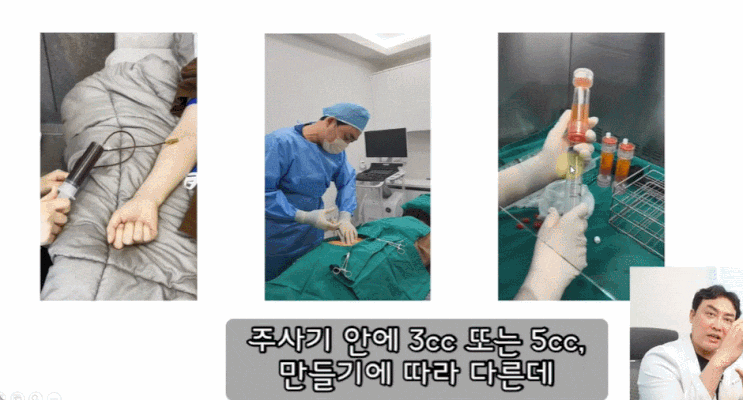
Stem cell + PRP combination treatment — synergy effect
Stem cells (seed) + PRP (fertilizer) combination — the effect often appears longer and stronger than either alone.

Does cartilage fully regenerate?

I’ll tell you this part precisely. It’s difficult to say it returns to complete cartilage like in your 20s. Because cartilage is a tissue without blood vessels, complete natural regeneration is inherently difficult to begin with.

The goal of stem cell treatment is not restoration but reinforcement.

It reduces inflammation at the damaged site and creates an environment for cartilage regeneration, thereby lowering pain and maintaining joint function. In practice, changes such as the defect filling in or cartilage thickness increasing are sometimes observed after treatment, and many people report that their everyday discomfort has decreased.

However, it takes time for these changes to appear. It’s not a procedure where the pain vanishes the very next day after the injection. It usually takes about 3 to 6 months for the stem cells to settle in and take effect.

If you need a fast effect, a treatment other than stem cells may suit you better. For example, if your pain is closer to the acute phase, it’s reasonable to first calm the inflammation and pain with PRP alone.

What you must check before getting treatment

① Sterile environment and equipment

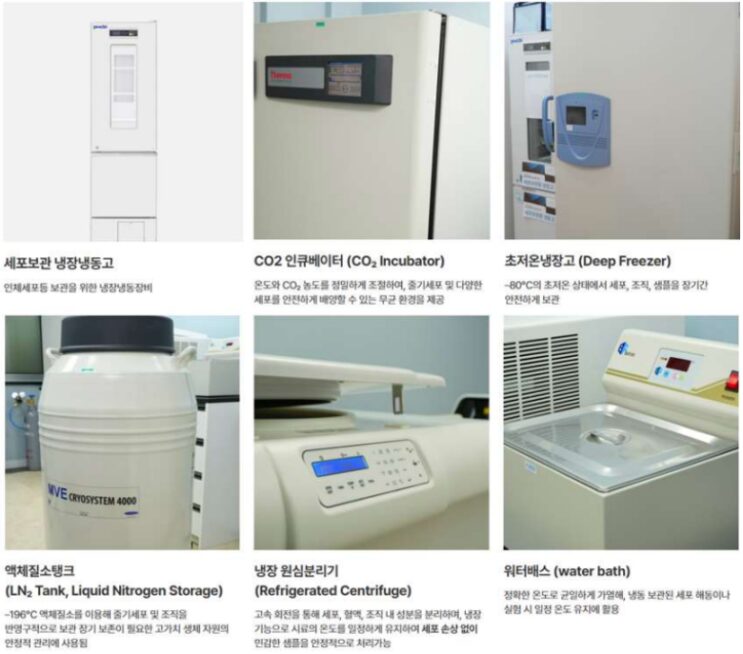
Stem cells are highly sensitive to temperature and contamination. It’s not simply about giving an injection—it’s important to confirm whether the place is properly equipped with a sterile environment and dedicated equipment (centrifuge, cell-separation system, temperature-control device).

② Pre- and post-procedure care program

If you have diabetes or chronic inflammation, also ask whether a pre- and post-procedure care program is carried out alongside. If the inflammatory environment remains as it is, the effect can be cut in half.

③ Checking indications — it’s not recommended for everyone

To be honest, I do not recommend stem cell treatment to everyone who comes in for a consultation. That’s because if arthritis has progressed significantly or the leg alignment is greatly off, it can be hard to expect an effect. The first step is to accurately confirm whether your condition meets the treatment’s indications.
Honest guidance on stem cell indications and contraindications
It’s not recommended for every patient. Honestly explaining the indications and contraindications is the medical team’s responsibility.
Quote-ready · The essence of arthritis stem cell treatment The goal of stem cell treatment is not to perfectly restore damaged cartilage to a 20-year-old’s state, but a “reinforcement” treatment that reduces inflammation and maintains joint function. The effect is evaluated at the 3–6 month mark.
Option 1Bone marrow BMAC — 2023 New Health Technology designation. Combination of mesenchymal stem cells, immunomodulation, and growth factors
Option 2Fat SVF — high concentration of mesenchymal stem cells, for older age or cases needing regenerative potential
CombinePRP — acts as fertilizer for the stem cells (seed). Inflammation control + promotion of natural healing
Not forKL 4 with significantly advanced arthritis / greatly off leg alignment / acute phase needing fast relief
3–6 moStandard timing for
effect evaluation
2023BMAC
New Health Technology designation
3 typesSaeron Clinic
BMAC·SVF·PRP available
A scene from the consultation room

This is the story of a woman in her 70s who came in for a consultation last month. She had been advised to get bone marrow stem cells at another hospital, but she said bone marrow harvesting scared her and came to Saeron Clinic.

Looking at her overall condition along with the X-ray, it was late KL 3, with relatively good leg alignment. However, given her age, her bone marrow concentration was likely lowered. I told her honestly: “At this age, fat (SVF) is more advantageous than bone marrow in terms of concentration. Combining PRP with it also tackles the pain and inflammation together.”

At her checkup 4 months later, she was pleased that her walking distance had increased. The most important thing is to decide with enough information before receiving treatment.

Checklist before arthritis stem cell treatment
Clinic check
Personal condition
Aligning expectations
Frequently Asked Questions
Does bone marrow harvesting hurt a lot?
It’s done by aspirating a small amount from the pelvic bone (iliac crest) under local anesthesia, so the procedure itself is short and recovery tends to be quick. There may be a brief soreness right after the procedure, but it doesn’t significantly interfere with returning to daily life. For those who are very fearful, we consider the fat (SVF) method as an alternative.
If I get it once, does the effect last for life?
No. Because stem cell treatment is “reinforcement,” not “restoration,” the duration of the effect varies depending on joint use, weight, and whether you do rehab. Generally, you can expect a reinforcing effect for about 1–2 years, and depending on the stage of progression, we consider a repeat procedure or moving on to the next step (transplant, artificial joint). Above all, the effect lasts longer only when rehab and weight management go together with the procedure.
Do I have to get both stem cells and PRP?
Not necessarily. It depends on the patient’s condition. For early stages or pain-focused cases, PRP alone may be enough, and from the intermediate stage onward, combining stem cells (BMAC or SVF) + PRP is often more effective. In the consultation room, we decide on the combination by looking together at the X-ray, pain pattern, age, and activity level.
If I’m not a candidate, what treatment is right for me?
With KL grade 4 advanced arthritis or severe leg alignment deformity, it’s hard to expect an effect from stem cells alone. In that case, we consider an osteotomy (correction of bow legs) or artificial joint surgery. At Saeron Clinic, after reviewing your imaging and overall condition, if stem cells would be difficult we honestly guide you toward another direction.
Glossary
New Health Technology (Innovative Medical Technology)
DefinitionA medical technology whose clinical effectiveness and safety have been recognized by the Ministry of Health and Welfare after evaluation by the National Evidence-based Healthcare Collaborating Agency (NECA). Intra-articular knee injection using BMAC was designated a New Health Technology in 2023.
In plain terms“A new medical technology whose effectiveness and safety the state has recognized” — meaning it has been recognized as a formal medical practice.
PRP (Platelet-Rich Plasma)
DefinitionPlatelet-Rich Plasma. An injectable made by concentrating platelets from your own blood; it contains various growth factors (PDGF, VEGF, TGF-β, etc.) and serves to control inflammation and promote tissue healing.
In plain terms“Fertilizer for stem cell treatment” — it prepares the environment so the seed (stem cells) grows well.
Mesenchymal Stem Cell (MSC)
DefinitionMesenchymal Stem Cell. A multipotent stem cell that can differentiate into cartilage, bone, fat, muscle, and more. It secretes beneficial factors (cytokines, growth factors) into damaged tissue to create a regenerative environment.
In plain terms“The key cell for joint recovery” — present in fat in tens to hundreds of times the amount found in bone marrow.
This post is a medical advertisement written by the clinic for the purpose of providing medical information, and it complies with Article 56, Paragraph 1 of the Medical Service Act. Results may vary depending on an individual’s constitution and health condition, so please decide on treatment through thorough consultation with medical staff.

At Saeron Clinic, the chief director (Dr. Joo Yong-min) personally handles everything from consultation to treatment, the procedure, and follow-up care, and the clinic operates on a 100% appointment-only basis to provide individualized care for each and every patient. The number of patients seen per day is limited, so we appreciate your understanding.

Directions — Saeron Clinic · 5F, Sanggye Building, 1077 Jungang-daero, Yeonje-gu, Busan · 051-710-1616
THE SAERON STORY

주용민 대표원장 · 응급의학과 전문의

15년 이상 응급의학과 최전선에서 약 15만 명의 환자를 진료한 경험을 바탕으로, 줄기세포·재생의학 한 길에 집중합니다. 보건복지부 지정 첨단재생의료 실시기관으로, 진단부터 시술·사후관리까지 직접 전담합니다.

15+년 응급의학 경력
150K+명 진료 경험
100%예약제 운영