







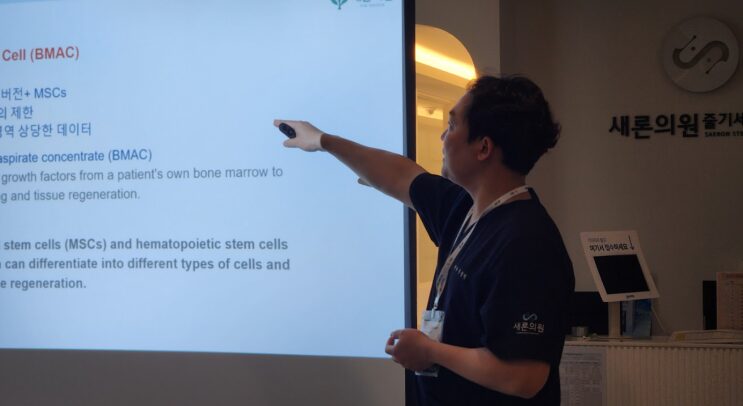
Did you know there are three types of stem cell injections?
When a clinic says “stem cell injection,” it all sounds like the same thing. But in reality, the materials are different.
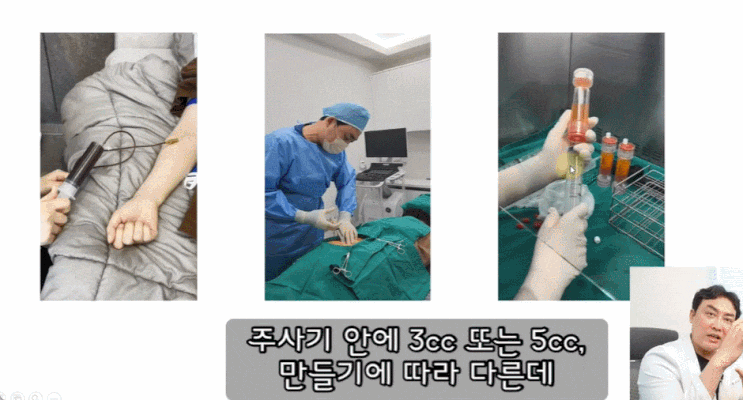
- PRP, drawn from blood
- BMAC, drawn from pelvic bone marrow
- SVF, drawn from abdominal fat
All three are autologous treatments harvested from your own body, but the components they contain and their strengths are different.
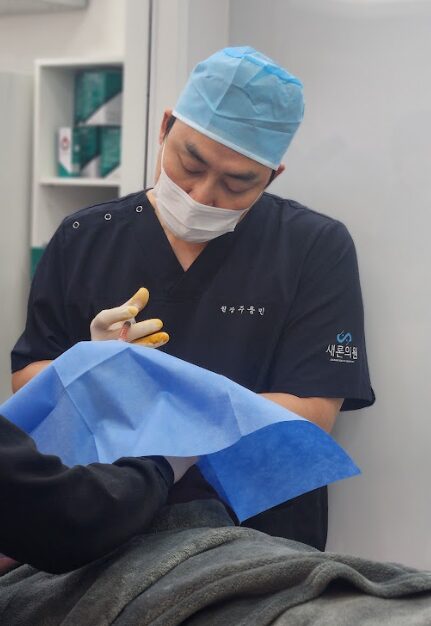
① PRP — the entry-level regenerative injection
For PRP, growth factors are the core. It contains almost no stem cells, but it is effective at calming inflammation within the joint and reducing pain. It’s the simplest and least burdensome, so think of it as the entry point to regenerative injections.
② BMAC — the concentrated bone marrow combination package
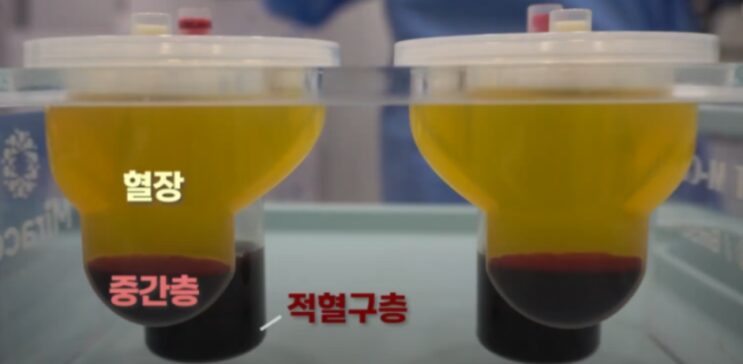
BMAC is a bone marrow concentrate. It’s a combination package that contains mesenchymal stem cells, immunomodulatory cells, and growth factors all at once. It has a strong anti-inflammatory effect, and some clinical studies have confirmed a positive influence on maintaining cartilage thickness on MRI.
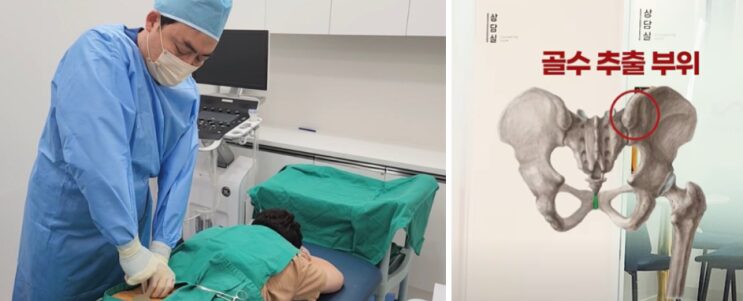
Many people say “bone marrow harvesting sounds scary,” but in reality it’s done by aspirating a small amount from the pelvic bone under local anesthesia, so recovery tends to be quick.
③ SVF — the highest regenerative potential
SVF is stem cells extracted from fat. Of the three, it has the highest content of mesenchymal stem cells and the greatest regenerative potential. Recently, research continues to emerge showing that combining it with nano-fat further increases its cartilage-protective effect.
| Category | PRP (blood) | BMAC (bone marrow) | SVF (fat) |
|---|---|---|---|
| Harvest site | Arm venous blood | Iliac crest of the pelvis | Abdominal fat |
| Stem cells | Almost none | Moderate | Highest concentration |
| Key action | Inflammation control · pain relief | Balance of anti-inflammation + regeneration | Maximum regenerative potential |
| Regulatory recognition | — | 2023 New Health Technology designation | Clinical use at Advanced Regenerative Medicine facilities |
| Indication | Early stage · pain-focused | Intermediate stage · combination | Older age · regenerative potential needed |
Cartilage does not grow back. I’ll tell you honestly.
With current technology, perfectly reconstructing damaged cartilage is difficult. And if you set the wrong goal, you’re bound to be disappointed.
Not “cartilage grows back,” but “it slows arthritis from worsening faster” — that is the real goal.The real role of a stem cell injection is this.
- Slowing arthritis from worsening faster
- Reducing pain
- Postponing the timing of surgery as much as possible
- Buying time to carry out rehabilitation exercises alongside treatment
This may sound like an understatement. But the reality that “a patient in their 60s who was advised to have surgery right away was able to walk for 2 more years by combining injection treatment with rehabilitation” is by no means trivial.
What do the best knee clinics in Busan have in common?
When the New Health Technology designation came, knee stem cell injections spread like a trend. Even departments with no experience rushed to adopt them, but once insurance and supplementary coverage were blocked, most of those doctors disappeared.
I was doing it before all that, and I still do it now. That’s because I designed my treatment on data, not on a trend.
For which patient PRP alone is enough, who needs BMAC, who should have it combined with SVF — I still judge each and every person honestly.
If you’re looking for the best knee clinic in Busan, find a place that honestly explains things all the way down to the limitations, rather than one that recommends the treatment as if it’s unconditionally great. That difference determines your money and your time.
all available
the timing of surgery
ER clinical experience
3 questions you must ask during your clinic consultation
The fastest way to identify the best knee clinic in Busan is to throw out the following three questions during your consultation. How the answers come back reveals the level of that clinic.
① “Between PRP, BMAC, and SVF, which one is right for me?”
Be wary of a place that says “we only do one stem cell injection” or that recommends only one option regardless of your condition. They should make a recommendation with evidence after reviewing your X-ray, age, pain pattern, and body type.
② “Will my cartilage grow back?”
A place that flatly declares “Yes, it will grow back” is not being honest. A trustworthy Busan knee clinic answers, “Perfect regeneration is difficult. But it does have the effect of slowing progression, reducing pain, and postponing the timing of surgery.”
③ “Could it be that stem cells aren’t right for me?”
A place that answers “anyone can receive it” is dangerous. The key is whether they honestly tell you about contraindications—such as KL grade 4, severe leg alignment deformity, or active infection.
Last month, a man in his late 60s came to Saeron Clinic. He had been advised to undergo artificial joint surgery at another hospital, but he said, “I want to put it off at least until my daughter’s wedding.”
His X-ray showed late KL 3, with slightly bow-legged (O-shaped) alignment. I told him honestly: “In this condition, I can’t guarantee that stem cells will let you walk perfectly all the way to the wedding. However, if you combine BMAC + PRP with rehabilitation, there’s a high chance of lowering your pain and being able to walk a certain distance without much trouble. After a 6-month evaluation, it would be reasonable to reconsider the artificial joint.”
At the 4-month mark, his pain had decreased and he walked the wedding procession well. A year later he did go on to an artificial joint, but that one year was by no means a trivial amount of time for him.