




보건복지부 지정 첨단재생의료 실시기관
Saeron Clinic Magazine Skin Regeneration

Skin Boosters vs. Autologous Stem Cells: Which Layer Does Your Skin Actually Need? (Rejuran · Juvelook · PRP · SVF · BMAC)

Hello. I’m Dr. Joo Yong-min, director of Saeron Clinic. I’m often asked, “I hear Rejuran and Juvelook have regenerative effects too — do I really need to go as far as stem cells?” Let me give you the conclusion first: not everyone needs stem cells. That said, these two treatments use the same word “regeneration” while working on completely different layers. Let me lay out that difference precisely.

Skin boosters like Rejuran and Juvelook are procedures that inject an externally manufactured product into the superficial dermis to stimulate collagen synthesis, while autologous stem cells are a procedure that uses cells obtained from your own blood, bone marrow, or fat to change the foundational environment deep in the dermis and subcutaneous layer. Skin boosters are repeated three or more times at 3–4 week intervals, while autologous stem cells are expected to give a long-term effect in one or two sessions. It isn’t that one is better than the other — the criterion is which layer your skin needs right now.

Key takeaways

  1. A skin booster is like spreading good fertilizer on the skin; autologous stem cells are like changing the soil itself.
  2. PRP is growth-factor-centered, SVF regenerates collagen and elastin, and BMAC has strong anti-inflammatory action, making it favorable for flushing and rosacea.
  3. If you’ve had skin boosters many times but the effect lasts shorter and shorter, it may be time to look at the base environment rather than the surface layer.

How far do Rejuran and Juvelook go?

Rejuran is a procedure that injects a polynucleotide component extracted from salmon into the dermis. It stimulates skin fibroblasts to induce collagen synthesis and is effective for improving pores, elasticity, and skin texture. Its advantages are good accessibility, little downtime, and broad public validation; its limitation is that it acts mainly on the superficial dermis, so repeat procedures are needed to maintain the effect.
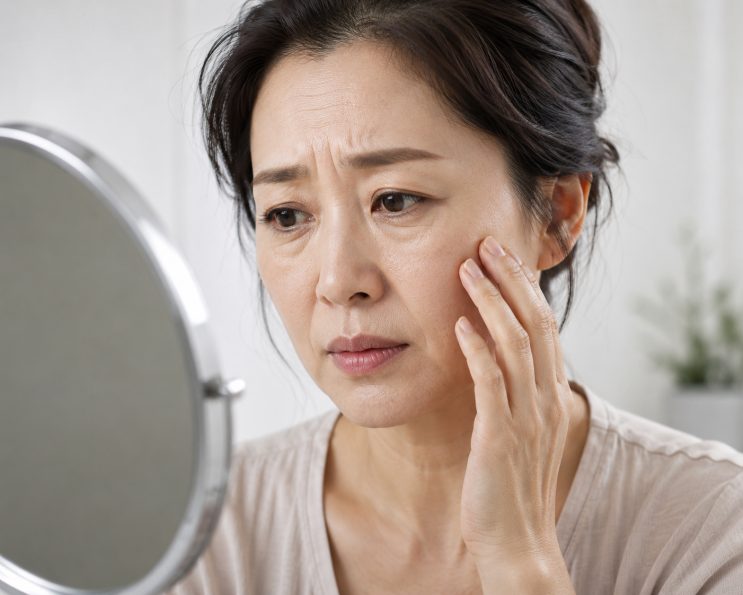
A middle-aged woman looking in the mirror and noticing loss of facial elasticity
Once you start to feel a loss of elasticity, you need to decide which layer to address.

Juvelook is a combined preparation of poly-L-lactic acid and hyaluronic acid, a skin booster from which you can expect both collagen-generation stimulation and a moisturizing effect. It has the advantage of improving volume and hydration at the same time, and it differs fundamentally from autologous stem cells in that it is an externally injected product.

Both procedures are excellent skin-care tools. They play a clear role in surface-layer regeneration. The issue is that there is a separate stage that the surface layer alone cannot resolve.

What is the difference between skin boosters and autologous stem cells?

The biggest difference is the source of the material. A skin booster is an externally manufactured product, while autologous stem cells are obtained from your own blood, bone marrow, or fat. The mechanism of action also differs. A skin booster stimulates the single pathway of collagen synthesis, while autologous stem cells act through several growth factors and stem cells at once.

The depth the regeneration reaches also differs. A skin booster works in the superficial dermis, while autologous stem cells reach deep into the dermis and subcutaneous layer. Foreign-body reaction is low but present with a skin booster, whereas autologous tissue has almost none. As for the procedure cycle, a skin booster is three or more sessions at 3–4 week intervals, while autologous stem cells achieve a long-term effect in one or two sessions.

If a skin booster is like spreading good fertilizer, autologous stem cells are like changing the soil itself.

Spreading fertilizer produces a visible change right away. But if the soil is barren, that effect doesn’t last long. Stem cells improve that soil itself — the skin’s foundational environment.
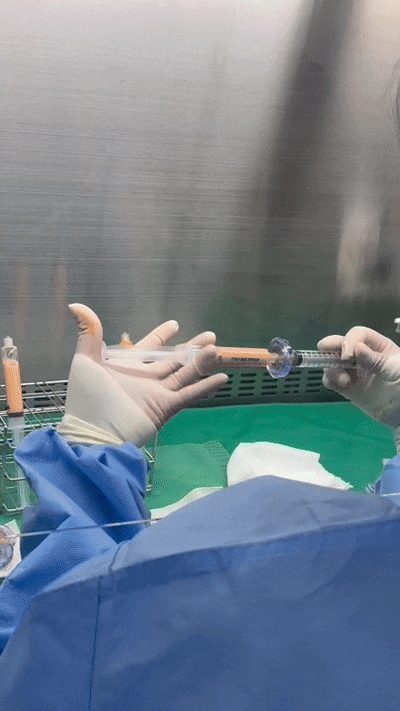
Autologous regenerative material prepared in a syringe and a sterile procedure tray just before the procedure
Autologous stem cells are obtained from your own tissue and used as they are.

What do autologous stem cells do in the skin?

The core is simple. They create an environment in which the skin can grow younger on its own.

PRP is drawn from your own blood. It secretes growth factors such as PDGF, VEGF, and TGF-beta to increase collagen density and refine pore size and skin texture. When combined with hyaluronic acid, improvements in elasticity have been reported even in people in their 50s and 60s.

SVF is a stem-cell concentrate drawn from fat, on a completely different level from a simple growth-factor injection. Stem cells, vascular endothelial cells, and immune cells act together; collagen and elastin fiber regeneration has been confirmed histologically, and with increased dermal thickness and vascular density, we see the potential for the skin structure itself to return to a younger state.

BMAC is drawn from your own bone marrow. It can supply mesenchymal stem cells at high concentration and has strong anti-inflammatory action, making it especially favorable for chronic inflammatory skin problems such as flushing and rosacea.
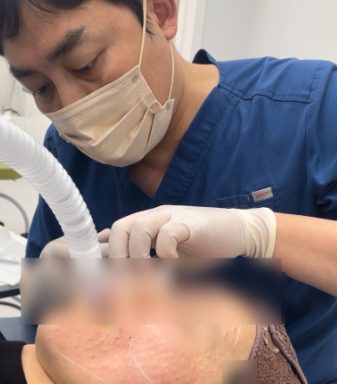
Dr. Joo Yong-min performing a regenerative procedure on a patient's face
Even with the same autologous tissue, its use varies with the processing method.

On top of this, the choice diverges further depending on how the fat is processed. Microfat is used for natural volume restoration and deep wrinkles, while nanofat is used for fine wrinkles in delicate areas such as around the eyes and mouth.

Quote-ready unitSkin boosters and autologous stem cells are not competitors but treatments on different layers.

WhyA skin booster stimulates collagen synthesis in the superficial dermis, while autologous stem cells change the foundational environment deep in the dermis and subcutaneous layer.
ExampleThe combination of improving the foundational environment with stem cells and then maintaining the surface layer with Rejuran is actually used often.
CautionBMAC and SVF require specialized equipment, personnel, and the relevant authorization. I recommend receiving them at an advanced regenerative medicine facility.

Am I at a stage that needs a stem-cell procedure?

If two or more of the following five apply to you, it may be worth a consultation. You’ve started to notice a marked loss of skin elasticity from your late 30s onward; you’ve had skin boosters several times but the effect lasts shorter and shorter; it’s not just wrinkles but volume loss and skin sagging progressing together; you want a regenerative material derived from your own body rather than an external product; you prefer long-term base improvement in one or two sessions over frequent repeat procedures.
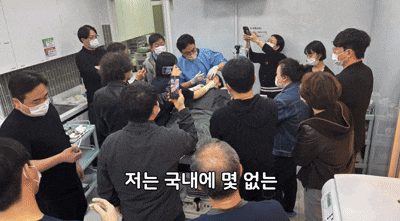
Dr. Joo Yong-min demonstrating a regenerative medicine procedure in front of several medical staff
Deciding which layer to address comes before the procedure itself.
In the clinic

There’s something people who’ve had skin boosters for over a year often say. “At first it lasted two months, but these days it’s back to normal in three weeks.” This isn’t that the procedure went wrong — it’s closer to a signal that you’ve moved into a stage the surface layer alone can’t handle.

Looking at the cost over the long run

Many people feel the burden by looking only at the per-session cost. But when you stretch the timeframe out, the math changes. A skin booster has a relatively low per-session cost but, including maintenance, runs to 6–12 sessions a year, with an effect lasting weeks to a few months that declines once you stop. Autologous stem cells have a high per-session cost but run to one or two sessions a year; there’s individual variation, but the effect lasts from several months to over a year, and an improved state of the skin’s base environment remains.

Cost and effect vary widely by medical institution, procedure scope, and individual condition. Please be sure to decide after a consultation with a specialist.
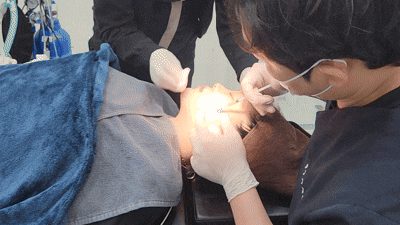
Medical staff performing a skin booster injection on a patient's face
Younger-looking skin is built on healthy skin soil.

Checklist before choosing a procedure

1. Understand your condition
2. Decide the layer
3. Verify the institution
Frequently asked questions

Can I receive Rejuran and a stem-cell procedure together?
Yes, and you can actually expect synergy from the combination. A strategy of improving the skin’s foundational environment with stem cells and then maintaining the surface layer with Rejuran is effective in many cases.
Between PRP and SVF, which is more effective for the face?
PRP is easy to access and a growth-factor-centered procedure, while SVF is a combined cell therapy including stem cells that aims at deeper tissue regeneration. It’s best to decide after a consultation based on your skin condition and goals.
Can autologous stem-cell procedures be received at any hospital?
PRP is possible at a relatively large number of medical institutions, but BMAC and SVF require specialized equipment, personnel, and the relevant authorization. I recommend receiving them at a Ministry of Health and Welfare–designated advanced regenerative medicine facility.
How long does the effect last?
There’s individual variation, but for SVF or microfat transfer, a lasting effect of one to two years or more has been reported. Because the skin structure itself improves, it tends to last longer than a skin booster.
Is it fine to just keep doing skin boosters?
If you’re at a stage that needs surface-layer care, it’s enough. However, if the effect lasts shorter and shorter, or if volume loss and sagging are progressing together, you need to look at the base environment as well.
Key terms
Skin booster
Def.A procedure that injects an externally manufactured regenerative material into the superficial dermis to induce collagen synthesis and hydration.
PlainThe side that spreads good fertilizer on the skin.
Polynucleotide (PN)
Def.A component extracted from salmon that stimulates fibroblasts to induce collagen synthesis. It is the main ingredient of Rejuran.
PlainA material that refines skin texture and pores.
SVF (stromal vascular fraction)
Def.A complex of stem cells, vascular endothelial cells, and immune cells isolated from your own fat.
PlainThe side that changes the skin’s soil.
Nanofat
Def.Fat processed into ultra-fine particles, used for fine wrinkles in delicate areas such as around the eyes and mouth.
PlainA form used on thin, delicate areas.

This post is medical advertising intended to provide medical information and complies with Article 56(1) of the Korean Medical Service Act. Effects and side effects may vary with individual constitution and health status, so please decide on treatment after a thorough consultation with a medical professional.

THE SAERON STORY

Dr. Yong-min Joo · Emergency Medicine Specialist

With over 15 years on the frontlines of emergency medicine and approximately 150,000 patients treated, Dr. Joo focuses exclusively on stem cell and regenerative medicine. As a Ministry of Health & Welfare–designated institution, he personally oversees every step from diagnosis to treatment and aftercare.

15+yrs in Emergency Med.
150K+patients treated
100%appointment only