
보건복지부 지정 첨단재생의료 실시기관
Saeron Clinic Magazine English Blog

Testosterone Testing and Injections — Why Isn’t Exercise Alone Enough?

Hello. I’m Dr. Joo Yong-min, director of Saeron Clinic, a designated advanced regenerative medicine facility. “Is it really age that makes me tire so easily now?” “If I train hard, will my vitality come back on its own?” “Is a testosterone test something only serious cases need?” Men in their late forties bring me these questions — short of breath after a few flights of stairs, waking up unrefreshed more often than not. Let me give you the conclusion first: sleep and lifestyle often weigh more heavily on vitality than age does. The question isn’t “how old are you” but “what is being drained.” Today I’ll lay out, on the evidence, when to get tested and how far exercise and injections actually help.

A testosterone test measures total and free testosterone from a blood sample when two or three of the following persist beyond three months: tiring easily with slow recovery, reduced frequency of morning erections, and lower drive and concentration. Before testing, the first thing to examine is sleep. Even healthy young men saw daytime testosterone fall by 10-15% after a week of sleeping five hours a night (Leproult and Van Cauter, JAMA, 2011) — a far larger swing than the 1-2% annual decline from aging. For exercise, a small but significant increase was confirmed only with aerobic and interval training, with no clear change from resistance training alone (Hayes and Elliott, Front Physiol, 2019). PRP and stem cell local injections have shown reported improvements in erectile function scores, but with follow-up within six months the evidence is still building.

Key takeaways

  1. Reduced vitality is a signal from sleep, stress, underlying disease, and hormone metabolism overlapping — not from age alone. Sleep is the first variable to check.
  2. Exercise matters for protecting muscle and blood vessels, but it won’t dramatically raise testosterone. The effect differs by type.
  3. Regenerative treatment (systemic IV, local injection) is a supportive option to run alongside lifestyle management, and you should decide knowing the limit that the longest follow-up is six months.

When should you get a testosterone test?

Male vitality is a composite state spanning physical energy, sexual function, and emotional motivation. Simply “feeling low on energy” and the medically diagnosable male menopause (late-onset hypogonadism) are different things. The former generally improves with rest, clusters in particular periods, and shows normal hormones on blood work. The latter recovers slowly even with ample rest, persists for months or more, and shows low testosterone on blood work.

The answer to “is this bad enough to see a doctor?” is relatively simple. You tire more easily than before and recover slowly. Morning erections have noticeably decreased. Drive and concentration aren’t what they were. If two or three of these persist beyond three months, the next step is to confirm it with blood work. In a large European male cohort study, about 2% of participants aged 40 and over met the criteria for late-onset hypogonadism, and that proportion rose with age and with comorbidities such as obesity (Wu et al., N Engl J Med, 2010). Age is one variable, not the whole story. The diagnostic criteria and the three-step approach are set out in a piece on confirming male menopause symptoms in three steps.
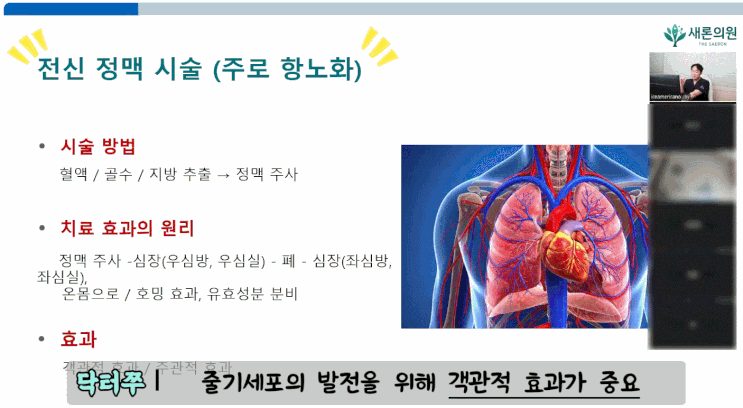
A Saeron Clinic lecture slide explaining the method and treatment principle of systemic intravenous procedures
We choose the treatment only after testing shows what is being drained.

What really drives the loss of vitality?

Reduced vitality is often not a hormone problem alone but sleep, stress, and vascular health overlapping. Among these, sleep is the variable you can check first and most easily. When sleep is short, stress hormones rise, testosterone falls behind them, and blood vessels and vitality drop together in a chain. Increased body fat slots into the same chain.

10-15%fall in daytime testosterone in young men after a week of five hours’ sleep (Leproult and Van Cauter, 2011)
2-4×increase in erectile dysfunction with diabetes, hypertension, or heart disease (KDCA National Health Information Portal)
63%proportion of men in their 50s reporting erection-related decline (KDCA National Health Information Portal)

Underlying disease is a large part of the backdrop too. Where diabetes or hypertension is present, reduced sexual function has been reported more often than where it isn’t (Kouidrat et al., Diabet Med, 2017). These conditions make vessels and nerves sensitive together, so this area is affected first. There is also analysis showing that men with lower testosterone more often carry several chronic conditions at once (Guay et al., Int J Impot Res, 2010). A study in which a group that added a stress-management programme showed better sexual-function measures (Kalaitzidou et al., Andrologia, 2014) is evidence that chronic tension pushes recovery capacity into the future. Brush these signals aside and you also delay the chance to see the burden accumulating in your vessels and nerves.

If I just train hard, will my testosterone rise?

Everyone assumes hard training raises testosterone. Yet a meta-analysis in men aged 60 and over found that aerobic and interval training produced a statistically significant but modest increase, while resistance training alone showed no clear change (Hayes and Elliott, Front Physiol, 2019). Honestly, exercise is not the universal answer to vitality.

“So exercise is pointless?” Not at all. It remains essential for preserving muscle mass and vascular health. But it’s better to set aside the expectation that it will dramatically lift the testosterone value itself. Different management strategies carry different amounts of accumulated evidence. Sleep improvement has the most, aerobic exercise next, and resistance training alone and PRP or stem cell regenerative treatment still have little. Taking care of the areas where evidence has accumulated first, and considering regenerative treatment as a next-stage add-on, is the order that fits. Reverse the order and the gap between expectation and result widens.

Managing vitality starts not with “what more should I take” but with confirming “what is being drained.”

How do systemic IV and local injection differ?

There are broadly two approaches in regenerative treatment. Systemic intravenous therapy aims at improving overall condition and the metabolic environment, and is used when fatigue and a general drop in condition occur together. Local injection delivers regenerative signals directly into local tissue and is considered when localized improvement is judged to be the greater need. The two have different purposes and are sometimes combined.

Aspect Systemic IV Local injection
Purpose Improving whole-body condition and metabolic environment Delivering regenerative signals directly to local tissue
Suits When fatigue and a general drop in condition occur together When localized improvement is judged the greater need
Evidence level Research on systemic anti-aging purposes is ongoing Reported improvement in erectile function scores; follow-up within six months
Combination Can be combined with local injection Can be combined with systemic IV

On the evidence for local injection: a systematic review pooling studies of intracavernosal PRP injection in men with erectile dysfunction reported a significant improvement in the erectile function index (IIEF) versus control (Panunzio et al., Int J Impot Res, 2023). Stem cell treatment likewise showed improvement at six months in erectile function scores, erection hardness, and blood-flow velocity measures (Senel et al., BMC Urol, 2025). Both studies, however, note as a limitation that the longest follow-up reported to date is six months. At our clinic we perform procedures using PRP obtained from blood, BMAC from bone marrow, and SVF from fat; how the three differ is covered in a piece comparing SVF and BMAC.
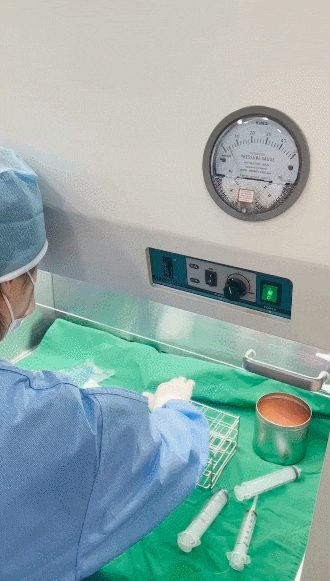
Clinicians in scrubs preparing sterile instruments in the procedure room
Because these procedures use your own blood and tissue, rejection risk is low — but testing comes first.

What should you know before regenerative treatment?

“Are there side effects?” Because we use your own blood or tissue, the risk of a rejection reaction is relatively low, but temporary pain, swelling, and bruising at the treated site can occur. “Does it work right away?” No. Tissue regeneration takes time and responses vary between individuals. I say plainly that this is not a procedure that promises a cure or 100% recovery.

In the clinic

The first thing I ask someone who comes in with reduced vitality is how many hours they’ve slept over the past few days. Men who came in mainly complaining of a general drop in condition sometimes tell me their fatigue eased after intravenous therapy, and those wanting localized improvement sometimes consider local injection alongside it. These are individual cases, and the same result won’t follow for everyone. The body is rather like a battery — leave it flat for long enough and the time to a full charge grows with it.

Quote-ready unitPRP and stem cell regenerative treatment aren’t magic that restores vitality — they’re being studied as supportive options to run alongside lifestyle management.

WhyBoth intracavernosal PRP injection and stem cell treatment report improved erectile function scores, but follow-up is within six months (Panunzio et al., 2023; Senel et al., 2025).
ExampleTake care first of the management with accumulated evidence, such as better sleep and aerobic exercise, then decide on regenerative treatment after seeing the test results.
CautionCome to the consultation having organized recent glucose, blood pressure and hormone values, your medications, and the improvement you’re after. Don’t settle on a procedure before testing.

How intravenous therapy acts on the whole body is explained in a piece on anti-aging injections and stem cell IV therapy, and how immune numbers actually shift in a piece on checking your immunity in numbers with the NK cell activity test.

Before a testosterone test

1. Self-check
2. Lifestyle variables
3. Consultation prep
Frequently asked questions

Is reduced male vitality really down to age?
Age plays a part, but it isn’t everything. There’s a study in which healthy young men saw testosterone fall 10-15% after a week of five hours’ sleep (Leproult and Van Cauter, 2011). Before blaming age, I’d suggest checking your sleep.
Will testosterone rise if I just train hard?
Aerobic and interval training showed a modest but significant increase, while resistance training alone showed no clear change (Hayes and Elliott, 2019). Exercise matters, but it isn’t the only answer.
How is a testosterone test done?
Blood work measures total and free testosterone, assessed together with a symptom questionnaire. Distinguishing simple fatigue from genuinely low hormones comes first, and we also look at other causes such as diabetes or thyroid disease.
Do PRP or stem cell treatments really help male vitality?
There are studies reporting improved erectile function scores, but most follow-up is within six months (Panunzio et al., 2023; Senel et al., 2025). Evidence on long-term effect is still accumulating, and the same result won’t follow for everyone.
Do I need both intravenous and local injection?
Not necessarily. Whether the drop in general condition stands out, or localized improvement is the greater need, determines the approach and whether to combine them. We decide on the basis of test results.
Key terms
Testosterone
Def.The principal male hormone, involved in muscle, bone, sexual function and drive; it declines slowly by 1-2% a year with age.
PlainA hormone that lack of sleep eats away faster than ageing does.
IIEF (International Index of Erectile Function)
Def.An international standard measure scoring erectile function by questionnaire, used in trials to compare before and after treatment.
PlainA report card that turns “it feels better” into a number.
Intracavernosal injection
Def.A local regenerative approach injecting autologous material such as PRP directly into the penile corpora cavernosa.
PlainSending the regenerative signal straight to where it’s needed rather than through the whole body.
Meta-analysis
Def.A research method that statistically pools the results of several studies on the same topic to see the overall trend.
PlainLooking at the average of many studies rather than a single one.

This post is medical advertising intended to provide medical information and complies with Article 56(1) of the Korean Medical Service Act. Effects and side effects may vary with individual constitution and health status, so please decide on treatment after a thorough consultation with a medical professional.

THE SAERON STORY

Dr. Yong-min Joo · Emergency Medicine Specialist

With over 15 years on the frontlines of emergency medicine and approximately 150,000 patients treated, Dr. Joo focuses exclusively on stem cell and regenerative medicine. As a Ministry of Health & Welfare–designated institution, he personally oversees every step from diagnosis to treatment and aftercare.

15+yrs in Emergency Med.
150K+patients treated
100%appointment only