



What is stem cell IV therapy?
Stem cell IV therapy circulates cultured mesenchymal stem cells (MSCs) through the whole body via a vein, delivering regulatory signals to surrounding cells and the immune system rather than directly replacing damaged tissue. The approach differs fundamentally from a local injection placed straight into the lesion. Everyone pictures stem cell treatment as planting new cells where the tissue is damaged, but intravenous infusion works differently.
To be straight with you, most of the cells entering the vein linger briefly near the lung capillaries and disappear. What they do instead, during that short window, is send signals to immune cells that are reacting excessively, through the various substances they secrete. It’s less a treatment that swaps cells out than one that joins the immune system’s conversation. In the consultation room I often meet people drawn to this approach when their response to existing immunosuppressive treatment hasn’t been sufficient, when inflammatory markers keep rising and falling, or when symptoms are scattered across several sites — joints, gut, skin.
Which values change in autoimmune disease?
“Improvement in values” here means markers such as DAS28, which expresses arthritis disease activity, or the erythrocyte sedimentation rate (ESR), which shows systemic inflammation, falling after treatment. Changes of exactly this kind were observed in an intravenous trial in patients with rheumatoid arthritis (Park et al., Stem Cells Transl Med, 2026).
| Marker | Change confirmed in the research | Availability at a general clinic |
|---|---|---|
| ESR (erythrocyte sedimentation rate) | Improvement from a pre-treatment mean of 23.3 mm/h | Available — a standard blood test item |
| CRP (C-reactive protein) | Observed from a pre-treatment mean around 0.81 mg/dL | Available — a standard blood test item |
| DAS28 (arthritis disease activity) | Fell from a mean of 4.76 to 2.24 at 3 months, held to 12 months, then drifted back toward baseline over 5 years | Limited — a calculated score combining joint examination and blood work; needs rheumatology |
One point deserves flagging. Papers often list cytokine values such as IL-6, TNF-α, and IL-10 alongside these, but such markers are research assays requiring multiplex cytokine analysis equipment. They are difficult to run routinely in general clinical practice, and the markers you’ll actually track repeatedly are closer to inflammatory values like ESR and CRP, together with condition-specific autoantibodies such as rheumatoid factor, anti-CCP antibody, antinuclear antibody (ANA), and anti-dsDNA antibody, plus complement (C3, C4).
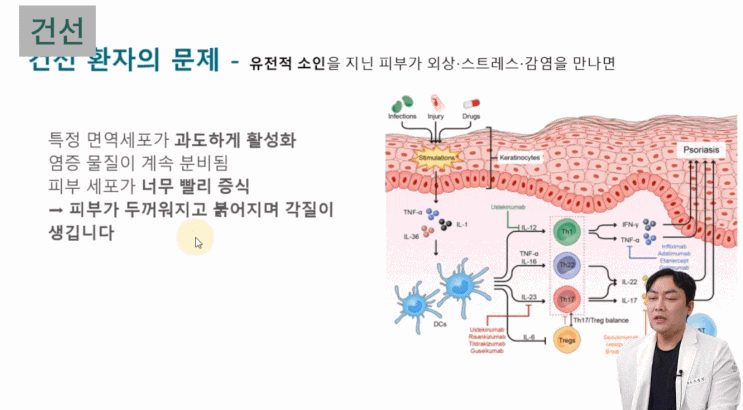
A multicentre study in patients with lupus (systemic lupus erythematosus) likewise reported cases reaching clinical remission after intravenous therapy (Wang et al., Arthritis Res Ther, 2014). Psoriasis follows a similar pattern. In a trial giving repeated intravenous infusions of umbilical cord blood stem cells to 17 patients with moderate-to-severe psoriasis, changes in immune cell composition were observed alongside patients whose skin severity score (PASI) improved — regulatory T cells (Treg) rose and inflammatory Th17 cells fell, though blood IL-6 itself showed no clear change before and after treatment (Cheng et al., Signal Transduct Target Ther, 2022). This kind of immune cell subset analysis requires flow cytometry equipment and is even harder to run in general practice. A fall in the numbers doesn’t mean a cure, and treatment success can’t be declared from a test value alone. The basics of reading immune values in numbers are covered in a piece on checking immunity with the NK cell activity test.
What evidence is accumulating?
“Evidence is accumulating” means that, beyond individual case reports, randomized controlled trials (RCTs) conducted at multiple institutions are repeatedly showing results in a similar direction. A pooled analysis published in 2025 captures this trend well.
That analysis found comparatively clear symptom improvement across several autoimmune conditions including lupus and inflammatory bowel disease, while stating that evidence remains limited in multiple sclerosis and systemic sclerosis (Zeng et al., Stem Cell Res Ther, 2025). In a randomized controlled trial of 82 patients with Crohn’s disease, the disease activity index (CDAI) in the group receiving intravenous therapy fell markedly more than in controls (Zhang et al., Gut Liver, 2018). It’s also worth weighing that leaving recurring inflammatory values unaddressed can allow damage to accumulate in joint or gut tissue. A real-world example of value changes before and after stem cell IV therapy is set out in a piece on stem cell IV therapy and the numbers.
Saying evidence is accumulating carries two meanings at once — that an effect has been confirmed, and that the data on how it changes over time is still being filled in.
What about safety, and what limits remain?
“Safety has been confirmed” doesn’t mean there are no side effects — it means that in the research so far, treatment has been carried out comparatively safely without serious adverse events. In the Crohn’s disease study, 4 of 82 patients had fever after infusion and 7 had transient upper respiratory infection, but there were no serious adverse events (Zhang et al., 2018). The five-year follow-up in rheumatoid arthritis likewise reported comparative safety with no malignancy, embolism, or death (Park et al., 2026). That said, the same study also found that the DAS28 improvement was clearest between three and twelve months and then weakened gradually over five years.
In short, what is confirmed is that serious adverse events are rare and that evidence of improvement in values has accumulated in some condition groups; what is not yet confirmed is the duration of the effect and uniform efficacy across all autoimmune conditions.
Are the research stem cells and the actual procedure the same?
Here’s a point that must be flagged. The studies described above overwhelmingly infused allogeneic (donor-derived) mesenchymal stem cells (MSCs) cultured and expanded in a laboratory. By contrast, the autologous stem cell procedure actually performed at Korean clinic-level facilities is mostly SVF (stromal vascular fraction) — a mixture of cells separated from adipose tissue on the same day. SVF contains endothelial progenitor cells, macrophages, and fibroblasts alongside mesenchymal stem cells, and because it undergoes no culture and expansion it is in principle a different product from the cells used in the research.
So the changes in values confirmed in the papers cannot be assumed to reproduce in the procedure you receive at a Korean clinic. Checking what kind of cells are prepared and by what method, before the procedure, matters as much as the figures in the papers. What SVF is and how it’s obtained is covered in a piece explaining SVF stem cells, and the conditions a facility must meet to perform the procedure in a piece on what an advanced regenerative medicine facility is.
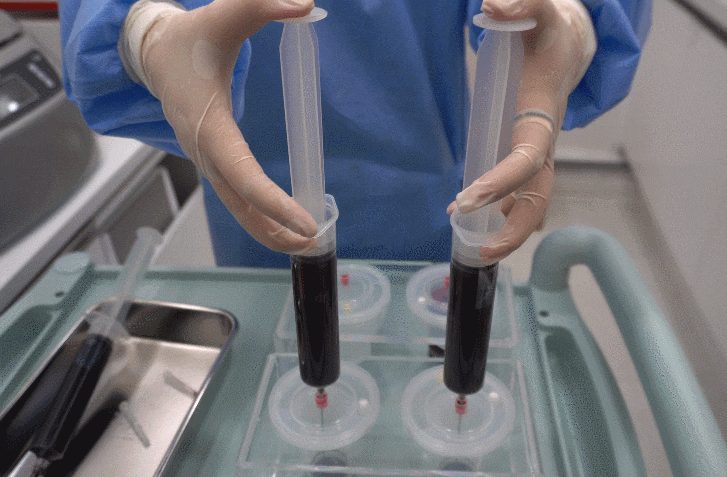
People who have been on immunosuppressants a long time and are frustrated that their inflammatory values won’t come down ask me about the intravenous approach. The first thing I tell them is that we do not stop the medication they’re currently taking. Then I explain whether it can run alongside their rheumatology care and what cells we’d prepare and how — and if they still want to proceed, we examine it as an option layered on top of existing treatment. Wanting the numbers at the next check-up to look different from last time is something many of the people I meet in the consultation room have in common.