



What is chronic inflammation, and why does it divide our body ages?
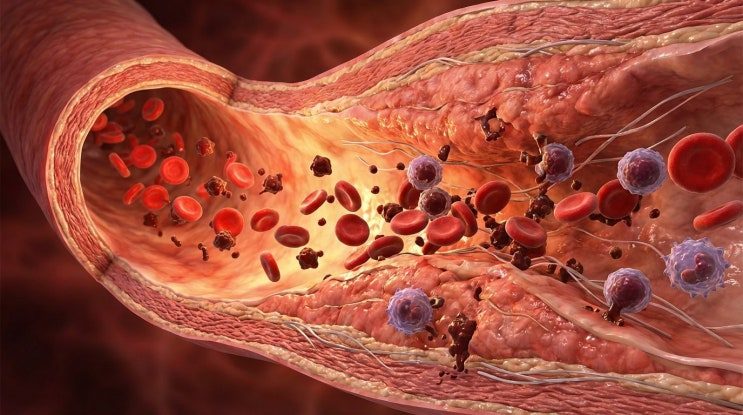
When you’re injured or overdo it, your body mounts an inflammatory response. A wound reddening and swelling, a temperature rising after overexertion — that’s this process, and it’s a natural response for recovery. Acute inflammation subsides when its cause disappears: a fire that flares and then goes out completely. The problem is that with age this inflammation doesn’t go out cleanly. Even when it looks entirely gone, it often remains at very low intensity. Embers still glowing quietly rather than fully extinguished — that is chronic inflammation, and when it hardens with age we call it inflammaging.
These embers don’t burn equally in everyone. In some they die down quickly; in others they smoulder for a long time. This difference is offered as one reason bodies feel different at the same age. When recovery is slow despite no particular illness, there’s often a background like this that you can’t see. That said, inflammaging isn’t the only angle that explains ageing — cellular senescence, oxidative stress, and declining mitochondrial function all play a part. What makes this angle special nonetheless is that it can be confirmed in numbers rather than in impressions (Franceschi et al., Nat Rev Endocrinol, 2018). The concept of inflammaging and why it starts in your forties was covered first in a piece explaining inflammaging.

How do you check your body’s age?
There are two routes to checking the degree of ageing: measuring cellular age directly, and estimating physical age indirectly through inflammation-related markers. One way to measure cellular age is to look at telomeres, the structures protecting the ends of chromosomes. Telomeres shorten a little with each cell division, so measuring their length gives a sense of how old the cells themselves are, separately from the age on your ID (Mather et al., J Gerontol A Biol Sci Med Sci, 2011).
But this isn’t all a clinic looks at. If embers are still burning somewhere inside, the traces remain in the blood.
| What we check | What it suggests |
|---|---|
| CRP, hs-CRP | Presence of inflammation in the body |
| NL ratio (neutrophil-to-lymphocyte) | Balance of inflammation and immunity |
| Homocysteine | Vascular health status |
| Albumin, total protein | Nutritional status, capacity to recover |
| NK cell activity | The force your immunity is putting out now |
| Telomere length | Cellular age |
No single number pinpoints ageing on its own. But gather these markers and you can see the direction — whether your body is tilted toward inflammation or toward recovery (Lassale et al., J Gerontol A Biol Sci Med Sci, 2019; Brauning et al., Cells, 2022). How to read NK cell activity is in a piece explaining the NK cell activity test, and nutritional imbalance at the cellular level continues in a piece on hair mineral and urine organic acids testing.
Getting test results doesn’t mean going straight to a procedure. We check history and medications and screen for warning signs on examination first, then discuss whether a procedure is appropriate.
What can you do once you’ve checked?
The approach to inflammaging widens in stages according to how far recovery has to go — lifestyle management, nutritional and functional-medicine approaches, then autologous cell therapy. The most basic are things you already know: sleep enough, reduce stress, eat well. Yet there are people who manage all this diligently and still don’t recover. These are the ones who tell me their chronic fatigue hasn’t lifted in three weeks, that they’re picking up every minor illness, that their skin heals noticeably more slowly.
In such cases we consider nutritional IV therapy or a functional-medicine approach that refills directly what the body lacks. If recovery is still slow after that, we examine something more fundamental — autologous cell therapy, which uses cells and growth factors obtained from your own blood, bone marrow, or fat to reawaken the recovery system itself. All three methods head to the same place: restoring the body’s own capacity to recover. Whichever you choose, though, effects appear differently in different people and the evidence is still accumulating. Making the most reasonable choice within that is the best available now.
When I ask about the eating habits of people who say “I take supplements, my checkup is fine, so why am I always this tired,” a common pattern emerges: fast meals built on refined carbohydrates, frequent soft drinks and desserts, simple-sugar snacks between meals. So before any talk of expensive supplements, I ask where their chopsticks go first at the dinner table.
Why does eating a meal leave you feeling heavy?
The real starting point of chronic inflammation is the post-meal glucose spike that repeats every day. When glucose climbs steeply within a short window after eating and then drops, and that swing repeats, oxidative stress and inflammatory signalling are stimulated. Add high-fat food on top of a meal built on refined carbohydrate — white rice, bread, noodles — and reactive oxygen species increase, inflammatory signalling pathways such as NF-κB are stimulated, and this can lead on to inflammatory cytokine responses such as IL-6 and TNF-α. A 2019 review in Nutrients set out how post-meal hyperglycaemia and hyperlipidaemia can connect to low-grade inflammation through these pathways (Margioris et al., Nutrients, 2019). Because we spend more than 16 hours a day in the post-meal state, this response doesn’t end with a single episode.
“But I take omega-3 and antioxidants” is a common objection. The thing is, supplements are closer to a fire extinguisher that reduces a fire already burning. Throw fresh embers on at every meal and try to put them out with an expensive extinguisher alone, and efficiency is bound to suffer. Reducing the embers themselves comes first.
Does changing meal order really make a difference?
Here’s a study published in Diabetes Care in 2015 by a team at Weill Cornell Medicine (Shukla et al., Diabetes Care, 2015). Eleven patients with obesity and type 2 diabetes ate the same meal — chicken breast, salad, broccoli, bread, orange juice — twice, a week apart, with only the order changed. Compared with eating carbohydrate first, eating vegetables and protein first produced glucose 28.6% lower at 30 minutes, 36.7% lower at 60 minutes, and 73% lower in cumulative two-hour glucose. Same food, same calories. There are two mechanisms: the dietary fibre in vegetables slows the absorption of the carbohydrate that follows, and eating protein first raises incretin hormones such as GLP-1, slowing gastric emptying.
“One meal I understand, but could I keep it up day to day?” A 16-week randomized controlled pilot published in Nutrients in 2023 answers that (Imai et al., Nutrients, 2023). Forty-five overweight and obese adults with prediabetes received standard nutritional counselling plus coaching to “eat carbohydrate last”; 94% reported high adherence, and in actual food records the order was kept about 79% of the time. Although no instruction was given to cut calories, vegetable and protein intake rose naturally and there was a mean weight-loss trend of about 2.7 kg. That said, the direct comparison between groups was a trend rather than a significant difference, and with a small sample you can’t conclude that simply changing meal order makes anyone lose weight.
That classmate who looked so much younger may not have been lucky — his embers may simply have been burning lower. If you want to see the size of yours in numbers, start with testing; if you want to change something from this evening, start with the order of your chopsticks. Whether hormonal change sits behind chronic fatigue is in a piece on confirming male menopause symptoms in three steps, and where to begin with anti-ageing in the four-stage anti-aging roadmap.