







The limits of conventional hair-loss treatment — the wall of “defense” and “relocation”
Where conventional hair-loss treatment has focused on “defense” and “relocation,” stem-cell treatment focuses on “regeneration.”
- Defense (drugs) — finasteride and dutasteride block DHT to stop further progression of hair loss. Effective, but once you stop taking them, it progresses again.
- Relocation (transplant) — follicles from the back of the head are moved and replanted at the crown or hairline. Permanent, but the total amount of your own hair doesn’t change.
- Regeneration (stem cells) — improves the very environment in which follicles grow, waking dormant follicles and making thinned hair thicker.
In particular, for people short on donor hair — that is, the transplantable resource at the back of the head — a transplant is either difficult to perform or bound to look unnatural. In this situation, regenerative treatment using stem cells becomes a realistic alternative.
A hair transplant is the work of moving hair; stem-cell treatment is the work of tending the soil in which hair will grow.How does stem-cell regenerative treatment work?
At a Busan hair-loss clinic, the heart of stem-cell treatment lies in improving the “soil” itself in which hair can grow. It’s not simply planting hair. Let me sum up the science in two parts.
① The homing effect
Stem cells have the ability to find their own way to sites of damaged tissue. This is called the “homing effect.” When stem cells are injected into the scalp, the cells migrate to the most damaged follicle sites, settle in, and begin repair work.
② Secretion of cytokines and growth factors
Homed stem cells secrete a variety of cytokines and growth factors (PDGF, VEGF, IGF, HGF, and others). These signaling substances perform three roles.
- Waking dormant hair cells — they switch follicles that had stayed in the resting phase into the growth phase.
- Promoting the formation of surrounding blood vessels (angiogenesis) — VEGF creates new microvessels to restore the follicle’s nutrient supply.
- Improving the inflammatory and aging environment — it calms chronic inflammation and restores the scalp’s homeostasis.
How much scientific evidence is there for stem-cell regeneration?
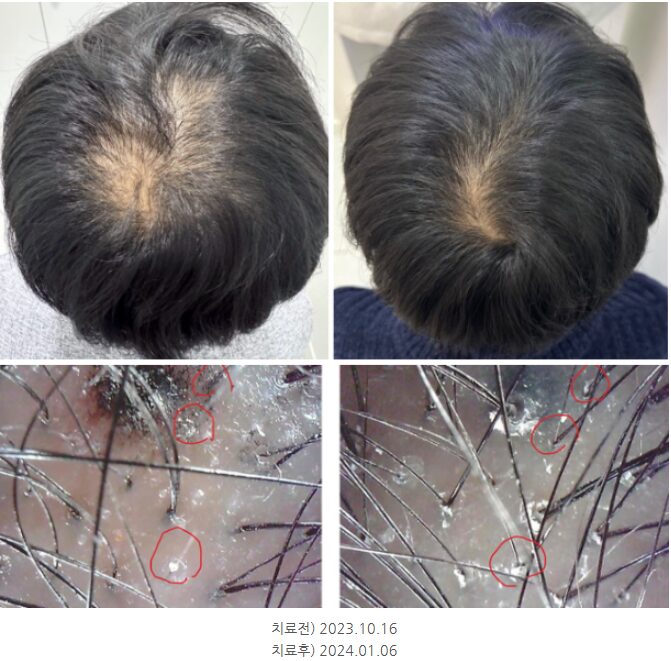
Since the 2020s, clinical evidence for stem-cell-derived treatment has been published steadily in international journals. Let me introduce one of the most frequently cited studies.
This is because, along with the homing effect by which stem cells find their own way to damaged follicle sites, a variety of cytokines and growth factors wake dormant hair cells and promote the formation of surrounding blood vessels. Stem cells induce the follicle’s growth phase and send signals that let hair which had stayed in the resting phase grow again.
How do hair transplants and stem cells differ?
| Category | Hair transplant (FUE/FUT) | Stem-cell regenerative treatment |
|---|---|---|
| Approach | Moves and replants follicles from the back of the head | Improves the soil itself in which follicles grow |
| Total hair amount | No change (relocation) | Wakes dormant follicles → visible density recovery |
| Suitable candidates | Progressing hair loss with sufficient donor resource at the back | Short on donor hair · overall thinning · improving the transplant environment |
| Durability | Transplanted hair is semi-permanent | Evaluated in 3–6-month cycles; needs concurrent DHT blocking |
| Limits | Scarring · limits of donor resource | Limited effect on completely bald areas |
(Saeron Clinic diagnosis)
2024 meta-analysis
evaluating SVF effect
Diagnosis comes before treatment
Saeron Clinic, an advanced regenerative medicine facility certified by the Ministry of Health and Welfare, treats based on verified data. Rather than recommending treatment unconditionally, our principle is to accurately diagnose the patient’s follicle condition and honestly explain the realistic expectations stem-cell treatment can offer.
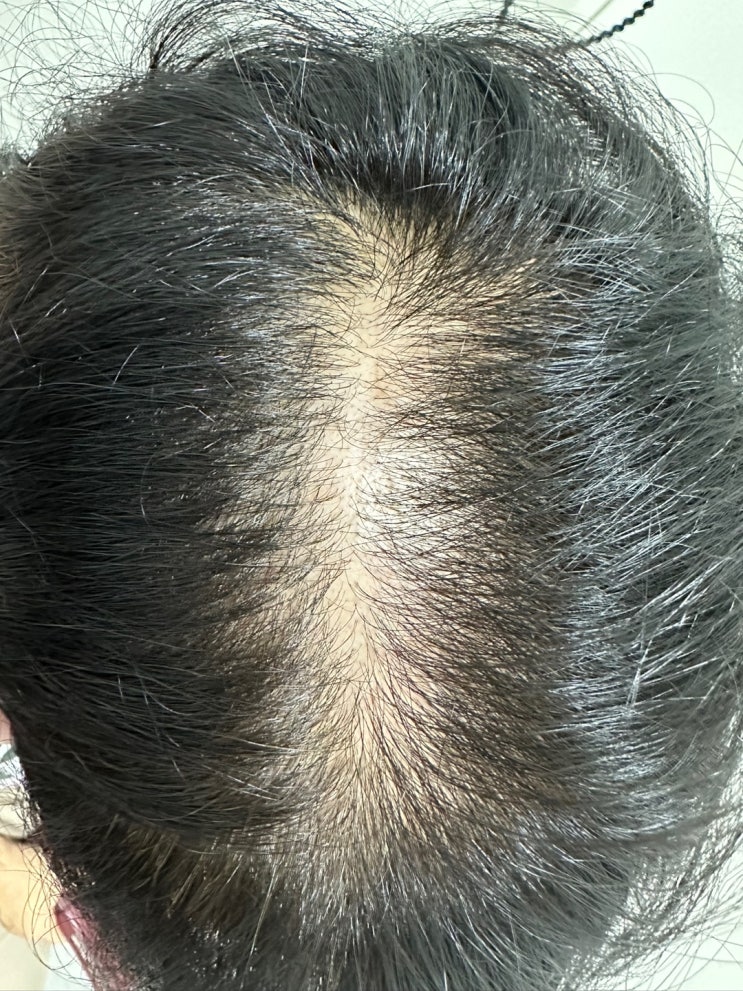
If you’re looking for a Busan hair-loss clinic, don’t just start treatment blindly. Please get an accurate diagnosis first. There are people for whom stem-cell treatment is suitable, and people for whom a different approach is better. Scalp imaging diagnosis is the starting point for that decision.
Last week a man in his early 50s came to Saeron Clinic after a hair-transplant consultation. He said he had been discouraged at another clinic, told that “a transplant is difficult because there isn’t enough donor hair at the back.”
When we did AFS scalp imaging, the crown follicles were not completely gone but in a severely atrophied state. The follicles themselves were alive; it was just that their nutrient and blood supply had been cut off. I told him honestly that a hair transplant wasn’t the answer, and that the priority was to first restore the scalp environment with SVF and wake the dormant follicles.
The start of any treatment decision is always diagnosis.