







보건복지부 지정 첨단재생의료 실시기관
Saeron Clinic Magazine English Blog

Why Stem Cells for Hair Loss? The Regenerative Science Behind It (Homing Effect · SVF · AFS Diagnosis)

Hello. I’m Dr. Joo Yong-min, director of Saeron Clinic, an advanced regenerative medicine facility studying the hair’s own power to come back to life. Many of the people reading this while researching a Busan hair-loss clinic already arrive practically as experts themselves. From the oral drug Propecia to topical minoxidil, and all the way to hair transplantation — they’ve absorbed a huge amount of information before coming in. Yet in front of the question “why stem cells, of all things?” many people feel unfamiliar. Today I’ll speak honestly about the regenerative-medicine direction hair-loss treatment should move toward, and the science behind it.

Where conventional hair-loss treatment has focused on “defense (drugs)” and “relocation (transplant),” stem-cell treatment focuses on “regeneration.” Along with the homing effect — by which stem cells find their own way to damaged follicle sites — they secrete cytokines and growth factors to wake dormant hair cells and promote the formation of surrounding blood vessels. Rather than moving and replanting hair, it’s an approach that improves the “soil” in which hair can grow.

Key takeaways
  • A hair transplant relocates and replants follicles from the back of the head, so the total amount of hair doesn’t change. It has limits for people short on donor hair.
  • The heart of stem-cell treatment isn’t planting hair but improving the soil in which hair can grow.
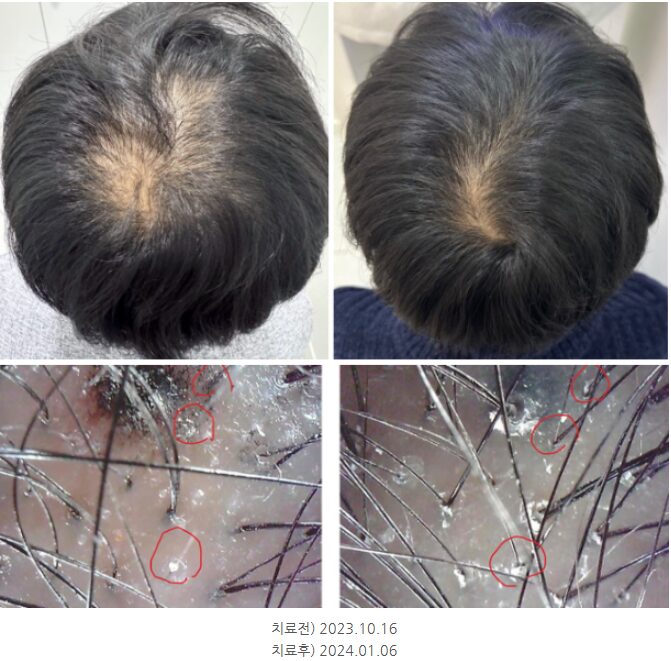
  • A 2023 clinical study in Archives of Dermatological Research reported that hair density and thickness increased significantly after autologous SVF injection.
  • Stem cells use the homing effect to find damaged follicles and, through cytokines and growth factors, induce the follicle’s growth phase.
  • Saeron Clinic is a Ministry of Health and Welfare–designated advanced regenerative medicine facility that accurately diagnoses scalp condition with 360-degree AFS rotational imaging. We don’t just start treating blindly.
Busan hair-loss clinic — the consultation room at Saeron Clinic
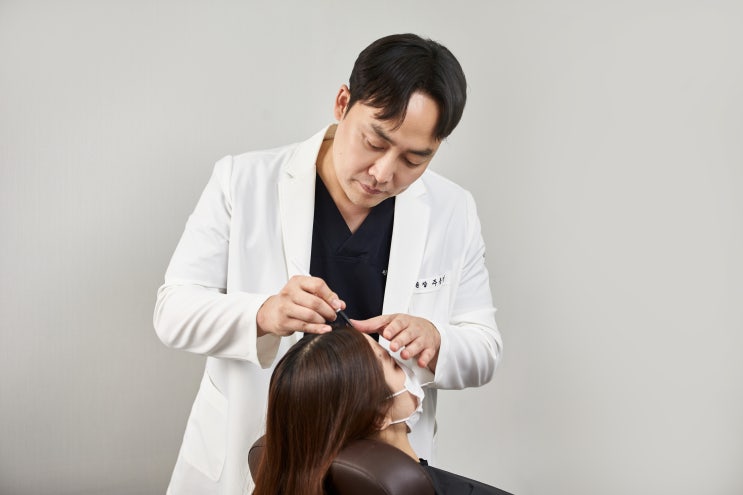
Saeron Clinic in Yeonsan-dong, Busan — as an advanced regenerative medicine facility, we treat based on verified data.

The limits of conventional hair-loss treatment — the wall of “defense” and “relocation”

Where conventional hair-loss treatment has focused on “defense” and “relocation,” stem-cell treatment focuses on “regeneration.”

  • Defense (drugs) — finasteride and dutasteride block DHT to stop further progression of hair loss. Effective, but once you stop taking them, it progresses again.
  • Relocation (transplant) — follicles from the back of the head are moved and replanted at the crown or hairline. Permanent, but the total amount of your own hair doesn’t change.
  • Regeneration (stem cells) — improves the very environment in which follicles grow, waking dormant follicles and making thinned hair thicker.

In particular, for people short on donor hair — that is, the transplantable resource at the back of the head — a transplant is either difficult to perform or bound to look unnatural. In this situation, regenerative treatment using stem cells becomes a realistic alternative.

A hair transplant is the work of moving hair; stem-cell treatment is the work of tending the soil in which hair will grow.

How does stem-cell regenerative treatment work?

At a Busan hair-loss clinic, the heart of stem-cell treatment lies in improving the “soil” itself in which hair can grow. It’s not simply planting hair. Let me sum up the science in two parts.

① The homing effect

Stem cells have the ability to find their own way to sites of damaged tissue. This is called the “homing effect.” When stem cells are injected into the scalp, the cells migrate to the most damaged follicle sites, settle in, and begin repair work.

② Secretion of cytokines and growth factors

Homed stem cells secrete a variety of cytokines and growth factors (PDGF, VEGF, IGF, HGF, and others). These signaling substances perform three roles.

  • Waking dormant hair cells — they switch follicles that had stayed in the resting phase into the growth phase.
  • Promoting the formation of surrounding blood vessels (angiogenesis) — VEGF creates new microvessels to restore the follicle’s nutrient supply.
  • Improving the inflammatory and aging environment — it calms chronic inflammation and restores the scalp’s homeostasis.
The stem-cell homing effect and the mechanism of follicle regeneration
Stem cells find damaged follicles (homing) and secrete growth factors to induce the follicle’s growth phase.

How much scientific evidence is there for stem-cell regeneration?

Since the 2020s, clinical evidence for stem-cell-derived treatment has been published steadily in international journals. Let me introduce one of the most frequently cited studies.

Quote-ready · autologous SVF hair-loss clinical result In a study published in Archives of Dermatological Research in 2023 (El-Khalawany et al.), a clinical result was reported in which hair density and thickness increased significantly in a group of hair-loss patients injected with autologous SVF.
MechanismHoming effect + secretion of cytokines and growth factors → induction of the follicle growth phase + angiogenesis
2024 meta-analysisPlastic and Reconstructive Surgery — an analysis of 12 RCTs confirmed hair density, regenerative effect, and safety in patients with androgenetic alopecia
LimitsCentered on prevention and complementary treatment. A treatment that guarantees a cure has not yet been developed.

This is because, along with the homing effect by which stem cells find their own way to damaged follicle sites, a variety of cytokines and growth factors wake dormant hair cells and promote the formation of surrounding blood vessels. Stem cells induce the follicle’s growth phase and send signals that let hair which had stayed in the resting phase grow again.

How do hair transplants and stem cells differ?

CategoryHair transplant (FUE/FUT)Stem-cell regenerative treatment
ApproachMoves and replants follicles from the back of the headImproves the soil itself in which follicles grow
Total hair amountNo change (relocation)Wakes dormant follicles → visible density recovery
Suitable candidatesProgressing hair loss with sufficient donor resource at the backShort on donor hair · overall thinning · improving the transplant environment
DurabilityTransplanted hair is semi-permanentEvaluated in 3–6-month cycles; needs concurrent DHT blocking
LimitsScarring · limits of donor resourceLimited effect on completely bald areas
Supplying nutrients to the soil and strengthening the roots so a sprout comes up on its own — that is stem-cell regenerative treatment.
360°AFS rotational scalp imaging
(Saeron Clinic diagnosis)
12 studiesRCTs in the
2024 meta-analysis
3–6 monthsstandard cycle for
evaluating SVF effect

Diagnosis comes before treatment

Saeron Clinic, an advanced regenerative medicine facility certified by the Ministry of Health and Welfare, treats based on verified data. Rather than recommending treatment unconditionally, our principle is to accurately diagnose the patient’s follicle condition and honestly explain the realistic expectations stem-cell treatment can offer.
Saeron Clinic's AFS 360-degree scalp diagnostic equipment
Saeron Clinic’s AFS diagnostic equipment — 360-degree rotational imaging quantitatively analyzes scalp condition.

If you’re looking for a Busan hair-loss clinic, don’t just start treatment blindly. Please get an accurate diagnosis first. There are people for whom stem-cell treatment is suitable, and people for whom a different approach is better. Scalp imaging diagnosis is the starting point for that decision.

A scene from the clinic

Last week a man in his early 50s came to Saeron Clinic after a hair-transplant consultation. He said he had been discouraged at another clinic, told that “a transplant is difficult because there isn’t enough donor hair at the back.”

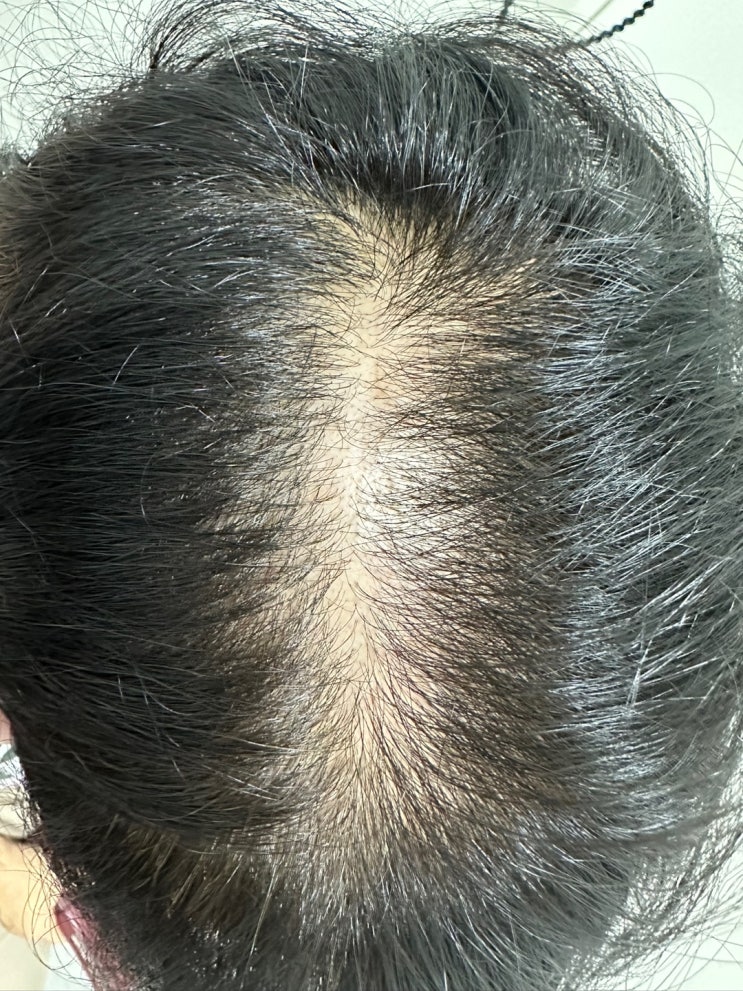
When we did AFS scalp imaging, the crown follicles were not completely gone but in a severely atrophied state. The follicles themselves were alive; it was just that their nutrient and blood supply had been cut off. I told him honestly that a hair transplant wasn’t the answer, and that the priority was to first restore the scalp environment with SVF and wake the dormant follicles.

The start of any treatment decision is always diagnosis.

Choosing a Busan hair-loss clinic — checklist
Facility certification
Diagnostic system
Treatment design
Frequently asked questions
Can I get stem-cell treatment instead of a hair transplant?
It depends on the situation. If the follicles are alive but atrophied, the priority is to improve the environment with stem cells first and wake the dormant follicles. Conversely, for areas where the follicles are completely gone, a transplant is the answer. And for people who can’t have a transplant because there isn’t enough donor hair at the back, or who are unsatisfied with a transplant result, stem cells become a meaningful alternative. It’s most accurate to decide after having an AFS or magnifier diagnosis.
What exactly is the homing effect?
It’s the biological phenomenon of stem cells finding their own way to sites of damaged tissue. SVF/MSC cells injected into the scalp migrate to the most damaged follicle sites, settle in, and secrete recovery signaling substances. Thanks to this homing effect, stem-cell treatment doesn’t act uniformly across the whole scalp but works intensively on the areas that need recovery.
When does the SVF procedure’s effect start to show?
In many cases, changes in the scalp environment (scalp thickness and elasticity) are felt first from around the 3-month mark, and changes in hair thickness and density become visible around the 6-month mark. That said, it isn’t a procedure completed in a single session; the number of sessions and their intervals are adjusted to the patient’s scalp condition. For AGA (androgenetic alopecia), concurrent use of a DHT inhibitor is a precondition for maintaining the effect.
What’s the most important criterion when getting stem-cell hair-loss treatment in Busan?
① whether it’s a Ministry of Health and Welfare–designated advanced regenerative medicine facility ② whether it has a scalp imaging diagnostic system ③ a medical team that can design a combination with medication and transplantation, not stem cells alone — these three. Stem-cell procedures at unauthorized facilities carry the risk that safety and cell standards haven’t been verified. You can check authorization status directly on the Ministry of Health and Welfare’s medical-institution information portal.
Key terms
Homing effect
Def.The biological phenomenon of stem cells finding their own way to sites of damaged tissue in response to chemokines and signaling molecules. It’s one of the core mechanisms of regenerative-medicine treatment.
Plain“The instinct of stem cells to find the injured spot on their own” — injected into the scalp, they gather at the atrophied follicle areas.
SVF (stromal vascular fraction)
Def.A cell fraction isolated from autologous fat that richly contains mesenchymal stem cells, growth factors, and immune-modulating cells. It holds 100–1,000 times more stem cells than bone marrow.
Plain“A concentrate of regenerative cells extracted from your own fat” — the main material for restoring the scalp environment.
AFS scalp diagnosis (360° rotational imaging)
Def.A diagnostic system that images the scalp and hair in 360-degree rotation to quantitatively assess follicle density, degree of shrinkage, and scalp condition.
Plain“An exam that precisely photographs your whole head from every side” — the starting point before deciding on stem-cell treatment.
This post is medical advertising written by this clinic to provide medical information, and it complies with Article 56(1) of the Korean Medical Service Act. Effects may vary with individual constitution and health status, so please decide on treatment after a thorough consultation with a medical professional.

At Saeron Clinic, the director (Dr. Joo Yong-min) personally handles everything from consultation to treatment, procedure, and aftercare, and the clinic operates 100% by appointment so that each patient receives individualized care. The number of patients per day is limited, so we appreciate your understanding.

Directions — Saeron Clinic · 5F Sanggye Building, 1077 Jungang-daero, Yeonje-gu, Busan · 051-710-1616
THE SAERON STORY

Dr. Yong-min Joo · Emergency Medicine Specialist

With over 15 years on the frontlines of emergency medicine and approximately 150,000 patients treated, Dr. Joo focuses exclusively on stem cell and regenerative medicine. As a Ministry of Health & Welfare–designated institution, he personally oversees every step from diagnosis to treatment and aftercare.

15+yrs in Emergency Med.
150K+patients treated
100%appointment only