
보건복지부 지정 첨단재생의료 실시기관
Saeron Clinic Magazine English Blog

Does the White-Jade Glutathione Drip Really Brighten Your Skin? What Glutathione Actually Does

Hello. I’m Dr. Joo Yong-min, director of Saeron Clinic, a designated advanced regenerative medicine facility. “Will this drip actually make my skin whiter?” “Why is it called the white-jade injection?” “Is it safe to keep getting it?” These are the three questions I hear almost every day in IV consultations. On a morning when you wash your face, look in the mirror, and your complexion seems unusually dull, this is often the first drip that comes to mind. Let me give you the conclusion first: the white-jade injection is not a skin-whitening drip. Today I’ll lay out honestly what it actually is, what the evidence says, and where its limits are.

The white-jade injection is a nickname given to an IV that replenishes glutathione, an antioxidant — it is not a formal prescription name. Glutathione is a substance the body makes on its own for liver detoxification and cell protection, and a brighter-looking skin tone is a side effect that follows from its influence on the melanin synthesis pathway. There is a small study in which melanin index improved over 12 weeks of administration, but Korea’s National Evidence-based healthcare Collaborating Agency reviewed cosmetic injections and found the clinical evidence for efficacy still insufficient. This drip makes sense when you approach it as an option for antioxidant support and general condition management, not as a shortcut to whiter skin.

Key takeaways

  1. The main ingredient of the white-jade injection is glutathione, and its original role is antioxidation and detoxification, not whitening.
  2. The change in skin tone is a side effect of shifting the balance between two types of melanin, and the evidence is still at the small-study stage.
  3. Avoid repeated high doses that haven’t been standardized, and check your liver and kidney status and whether you’re pregnant before deciding.

Where does the name “white-jade injection” come from?

The white-jade injection is not a hospital’s formal prescription name. It’s a nickname the cosmetic market attached to an intravenous therapy whose main ingredient is glutathione. White jade (白玉) — the idea was that it evokes skin as fair and clear as a piece of white jade stone. The proper names are closer to glutathione IV or antioxidant drip.

Trace the path and you’ll see that high-dose intravenous glutathione was first tried at overseas cosmetic clinics, then spread to domestic skin-and-beauty IV clinics and went mainstream, and as reviews saying “my skin turned as fair as white jade” circulated, the nickname stuck. That’s why I’m so often asked in the consultation room, “What exactly is the white-jade injection?” It means this is a drip whose name is familiar but whose identity isn’t well known.

The white-jade injection is a nickname, not a product name. The ingredients and doses blended alongside glutathione can differ from clinic to clinic.
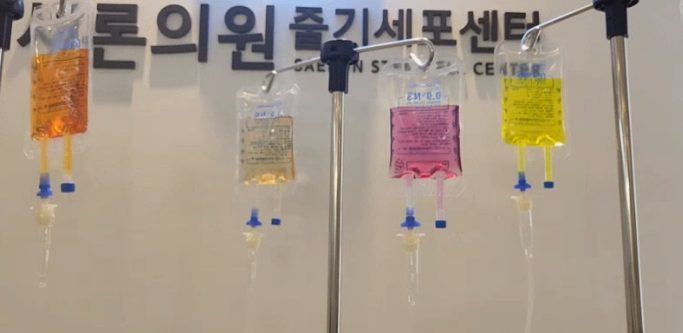
Several types of IV bags hanging in front of the Saeron Clinic Stem Cell Center sign
Even under the same name, the blend and the dose differ from clinic to clinic.

How does glutathione make skin brighter?

There are broadly two kinds of melanin that determine skin color: eumelanin, which ranges from dark brown to black, and pheomelanin, which is a comparatively lighter red-yellow. Glutathione is known to inhibit the action of tyrosinase, the enzyme that makes melanin, and to bind the copper ions that enzyme needs for its activity, lowering its function (Villarama and Maibach, Int J Cosmet Sci, 2005).

In this process, eumelanin production falls and the balance shifts toward a higher relative share of pheomelanin (Sonthalia et al., Indian J Dermatol Venereol Leprol, 2016). This is not erasing skin color — it is a concept of adjusting the proportions between types of melanin. That’s why the effect usually appears gradually over weeks to months, and why it varies widely with a person’s melanin type and lifestyle. Nor does existing pigment disappear.

12 weeksobservation period before a change in skin melanin index was reported (Weschawalit et al., 2017)
250 mgdaily dose used in that same study
2021the year Korea’s NECA flagged insufficient efficacy evidence for cosmetic injections

Is the effect overstated, or is it real?

Let me be straight with you: the evidence is accumulating, not settled. In a study conducted in Thailand, the group that received glutathione consistently for 12 weeks showed a trend toward improvement in skin melanin index (Weschawalit et al., Clin Cosmet Investig Dermatol, 2017). That said, the sample was not large, and the long-term evidence on how durable the effect is remains insufficient.

The same point has been raised domestically. In 2021, Korea’s National Evidence-based healthcare Collaborating Agency reviewed several cosmetic injections, including the white-jade injection, and concluded that evidence of clinical efficacy was lacking while adverse events were being reported, albeit rarely. “Insufficient evidence” does not mean “no effect at all,” but it does warrant a cool head.

Side effects deserve a mention too. As an intravenous therapy it generally proceeds safely, but hypersensitivity reactions can occur rarely, and in exceptional cases severe cutaneous reactions such as Stevens-Johnson syndrome have been reported (Johnson et al., J Burn Care Res, 2025). If you repeat non-standardized doses indiscriminately, what remains may not be the effect you hoped for but a burden you didn’t anticipate.

In the clinic

Some people tell me after a few sessions of the white-jade injection that they feel less fatigued and that their complexion looks brighter. Others clearly feel no great change. I confirm again and again in the consultation room that the same drip draws different responses from different people. That’s why I set expectations conservatively from the very first visit.

Quote-ready unitSaying the whitening effect of the white-jade injection is unproven doesn’t mean it has no effect — it means we can’t yet be definitive.

WhyA small 12-week study showed a trend of improvement in melanin index, but evidence on long-term maintenance is lacking.
ExampleIn 2021, Korea’s NECA reviewed cosmetic injections and found the clinical efficacy evidence insufficient.
CautionHypersensitivity has been reported rarely, and severe cutaneous reactions in exceptional cases. Avoid repeated high doses that haven’t been standardized.

So why do I still recommend it for health management?

Judged on whitening alone, it’s true that inflated expectations are mixed in. But the original role of glutathione is antioxidation — reducing oxidative stress in the body. Among the people who keep up with white-jade injections and oral glutathione, I fairly often meet patients in the consultation room who say their complexion has brightened and their overall condition has improved; given the substance’s original function as an antioxidant, that’s a natural enough result.

That’s why I recommend the white-jade injection not as a shortcut to whiter skin but as one option for antioxidant support and condition management. It suits people whose goal is overall condition rather than whitening, people persistently bothered by chronic fatigue or a dull complexion, and people without liver or kidney disease who are not pregnant or breastfeeding. Rather than looking at the white-jade injection in isolation, I’ve laid out how it differs from the Cinderella drip and high-dose vitamin C in a piece comparing the roles of three anti-aging IVs.
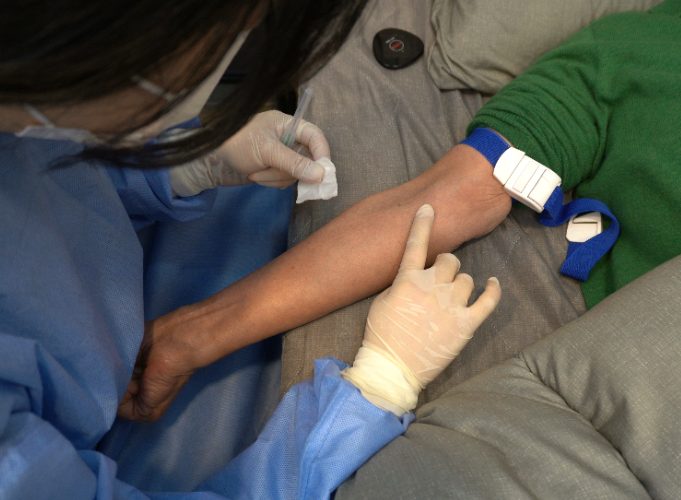
A clinician connecting an IV line to a vein in a patient's arm
Intravenous therapy is generally safe, but we check liver and kidney status before administering it.

What should you check before getting the white-jade injection?

Rather than leaning on the cachet of the name “white jade,” the right order is to first confirm what your body actually needs. A dull complexion doesn’t come down to a single cause like low glutathione. Sleep, iron and vitamin status, liver function, and chronic inflammation are all reflected in your face. So before choosing a drip, I use a basic blood panel to see in numbers what’s lacking and what’s in excess. If chronic fatigue sits in the background, I’d suggest reading why chronic inflammation accelerates your body’s age alongside this.

If you decide to go ahead, keep three things. First, proceed with a standardized dose. Second, disclose liver or kidney disease, pregnancy and breastfeeding, and any medications you’re taking. Third, don’t judge the effect in a matter of days. It helps to remember that the observation period in the relevant study was 12 weeks. If intravenous therapy itself is new to you, a piece on what we look at first before an IV is also worth a read. And if your goal is vascular health, it’s more appropriate to start with the real effects and limits of chelation, the so-called vascular cleansing drip than with the white-jade injection.

Before the white-jade injection

1. Set your goal
2. Safety check
3. How it’s done
Frequently asked questions

Will the white-jade injection actually make my skin whiter?
The white-jade injection isn’t a dedicated whitening drip — it replenishes an antioxidant called glutathione. An effect of the tone looking brighter has been reported through its involvement in the melanin synthesis pathway, but individual variation is wide and consistent management is needed. It does not remove existing pigment.
Why is it called the white-jade injection?
It’s a nickname from the cosmetic market, on the idea that it evokes skin as fair and clear as white jade. It isn’t a formal medical name, and the blended ingredients and doses can differ from clinic to clinic.
How soon does it work, and how long does it last?
In the relevant study, changes were reported after roughly 12 weeks of consistent administration, and repeated management is understood to be necessary to maintain them. This is not a drip you can judge in a few days.
Can oral glutathione supplements replace it?
There are reports that oral supplements help when taken consistently, but the absorption route and speed differ. Which one suits you depends on your goal and your health status.
Can anyone get it?
If you have liver or kidney disease, are pregnant or breastfeeding, or take certain medications, you must consult a medical professional beforehand. Because hypersensitivity has rarely been reported and severe cutaneous reactions in exceptional cases, avoid repeated high doses that haven’t been standardized.
Key terms
Glutathione
Def.An antioxidant the body makes on its own for liver detoxification and cell protection; the main ingredient of the white-jade injection.
PlainA substance that wipes the rust off the inside of your body. Whitening is the story that comes after.
Eumelanin and pheomelanin
Def.The two kinds of melanin that determine skin color — eumelanin in browns and blacks, pheomelanin in the red-yellow range.
PlainGlutathione doesn’t erase color; it shifts the proportion between two pigments.
Tyrosinase
Def.The enzyme responsible for the first step of melanin synthesis; it needs copper ions to work.
PlainGlutathione turns this enzyme’s switch down.
Oxidative stress
Def.A state in which reactive oxygen species exceed antioxidant capacity and damage cells.
PlainA state that often sits behind a dull complexion and chronic fatigue.

This post is medical advertising intended to provide medical information and complies with Article 56(1) of the Korean Medical Service Act. Effects and side effects may vary with individual constitution and health status, so please decide on treatment after a thorough consultation with a medical professional.

THE SAERON STORY

Dr. Yong-min Joo · Emergency Medicine Specialist

With over 15 years on the frontlines of emergency medicine and approximately 150,000 patients treated, Dr. Joo focuses exclusively on stem cell and regenerative medicine. As a Ministry of Health & Welfare–designated institution, he personally oversees every step from diagnosis to treatment and aftercare.

15+yrs in Emergency Med.
150K+patients treated
100%appointment only