



Why do stem cell injection prices vary so much?
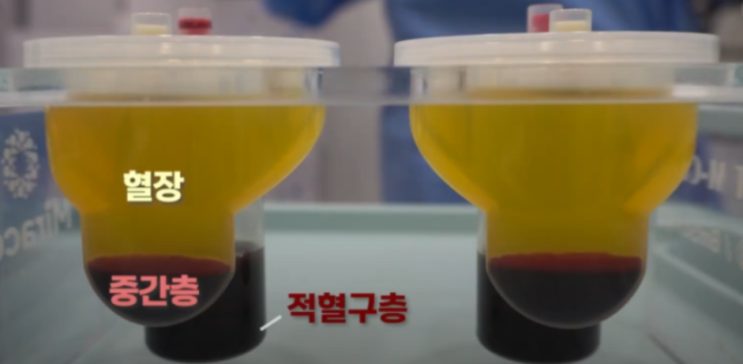
To understand the price gap you first have to know the material and the mechanism. There are broadly three materials used in regenerative treatment. PRP (platelet-rich plasma) from blood has the simplest process and the lowest cost. BMAC (bone marrow aspirate concentrate) from bone marrow contains stem cells together with growth factors and sits in the middle, while SVF (stromal vascular fraction) from fat has the highest cell count and the most complex processing, so it tends to cost the most.
One term needs care. You’ll often come across the phrase “blood stem cells,” but strictly speaking these are not stem cells. What’s drawn from blood is PRP: platelets and growth factors concentrated to a high density. The names are easy to mix up, so it helps to ask which material is being used at your consultation. PRP is cheap because of its simple structure — a blood draw, a straightforward centrifugation, and the procedure the same day — not because it doesn’t work. If it fits your treatment goal, it’s a reasonable choice.
Two further factors drive the price gap. One is cell count (dose). Even for the same SVF procedure, injecting 100 million cells and injecting 300 million naturally cost different amounts. The other is the clinic’s operating structure. Whether cell separation is done in-house or outsourced changes the base cost, and running costs such as rent are reflected in the price to some extent too.
The amount alone doesn’t tell you whether a treatment is good or not. Compare on the basis of dose and cell count.
What makes higher-priced stem cell treatment different?
What divides the price is whether mesenchymal stem cells (MSCs) are included. The more MSCs are involved, the more complex the treatment structure becomes, and preparation and technical difficulty rise with it, pushing the cost up. Bone marrow-derived BMAC concentrates cells extracted from marrow and contains MSCs together with a range of growth factors, so it’s used for inflammation control and improving the tissue recovery environment, and applied to flushing or chronically inflamed skin and to advanced hair loss.
Fat-derived SVF is not a simple cell injection. The adipose tissue plays a structural supporting role, stem cells and growth factors are secreted continuously, and combining it with microfat grafting raises the survival rate. Because it looks at the tissue environment as a whole, it focuses on maintaining and restoring the tissue rather than simple volume improvement. There are two processing methods: enzymatic processing, which secures a high cell count, and mechanical processing, which also makes use of the extracellular matrix (ECM) layer and microfat. How bone marrow and fat differ and when to choose each is covered in detail in a piece comparing SVF and BMAC.
How much is an appropriate dose by area?
These are the appropriate doses I use as a reference in practice across three areas. Comparing these numbers with what you’re told at a consultation makes the decision much easier.
| Area | Procedure | Appropriate dose standard |
|---|---|---|
| Face, hair loss | PRP | At least 60 cc blood drawn, 5-7 cc concentrated PRP |
| Bone marrow BMAC | At least 60 cc marrow drawn, 5-7 cc concentrate | |
| Fat-derived SVF | 60 cc pure fat | |
| Knee osteoarthritis | PRP (early stage) | 30 cc blood per knee, 3-5 cc concentrated PRP |
| Bone marrow BMAC (mid stage) | 60 cc marrow per knee, 5-6 cc concentrate | |
| Fat-derived SVF (mid-to-late stage) | 60 cc pure fat, enzymatic processing, 50 million+ cells | |
| Anti-aging IV | PRP IV | 240 cc blood (120 cc if elderly or slight of build) |
| BMAC IV | 120 cc marrow and 120 cc blood processed together | |
| SVF IV | 120 cc pure fat, enzymatic processing, 100-120 million cells |
For knee osteoarthritis the recommended procedure differs by stage: PRP is mainly considered early, bone marrow BMAC mid-stage, and fat-derived SVF mid-to-late. Bone marrow BMAC was recognized as a new health technology for knee osteoarthritis in July 2023. The per-session cost and effect of knee PRP is in a piece on the effect and cost of knee PRP injections, and the difference between the three procedures in a piece comparing three knee stem cell injections.
Is it all right to have a cheap stem cell procedure?
The answer to this is clear: “it depends what treatment you’re having.” If the goal is supplementing growth factors — skin vitality, mild regeneration, early hair loss, early arthritis — then the comparatively affordable PRP is a viable choice, because the structure is simple and same-day treatment is possible. If, on the other hand, you’re hoping for tissue regeneration, structural improvement, and long-term change, BMAC or SVF, which include MSCs, may also be worth considering.
What’s worth looking at more closely is the dose, rather than the price. If too little blood is drawn, there’s correspondingly less active material. At your consultation, it’s worth asking “how many cc of blood, and how many cc of PRP injected.” In the end, what matters more than price is whether the composition and purpose of the treatment fit your condition right now.
To people who say the spread in stem cell injection prices frightens them, I show a dose table rather than a price list. When someone has been to two clinics for consultations on the same-named procedure and I ask “how many cc did they say they’d draw, and how many cells did they say they’d put in,” many don’t remember. Once you know those two numbers, comparing becomes much easier. Our own clinic’s actual costs are published with the dose standards in our non-covered treatment cost guide.
What should you check before price?
Whether the treatment fits your condition comes first. For early ageing, mild skin improvement and early hair loss, PRP may be considered; for problem skin such as flushing or seborrhoeic dermatitis and for advanced hair loss, BMAC; for loss of elasticity, advanced ageing and hair loss that responds poorly, SVF. For knees, the KL grade confirmed on X-ray is also taken into account. Which procedure suits you is something we decide together after an examination. Anti-aging IVs divide into PRP IV, BMAC IV and SVF IV according to whether the goal is light condition management or active anti-ageing.
After that comes dose and cell count, and the conditions of the facility. Check whether it is a designated advanced regenerative medicine facility, whether cell separation is done in its own facility, and whether the consultation explains harvest volume and cell count in numbers. How intravenous therapy acts on the whole body is explained in a piece on anti-aging injections and stem cell IV therapy, and why results differ between people in a piece on why stem cell procedure results vary.