







What is Rejuran, and what is it approved for?
Rejuran is a product in which DNA extracted from salmon is purified and broken into fragments, and this polynucleotide ingredient is injected into the dermis. Let me start with the boundaries. You’ll often hear it grouped under the names PN or PDRN. This product family is approved as a medical device, not as a drug, and each product has its own approved intended use. You can check the exact approval details yourself by searching the product name in the medical device database of Korea’s Ministry of Food and Drug Safety (MFDS).
Many patients arrive believing Rejuran is a type of filler. The short answer is no. Filler creates volume by filling an empty space with material. Rejuran is not a material that fills space; it is an ingredient that helps skin cells signal their own repair. If volume was what you were hoping for, it’s worth resetting the goal before you start.
Rejuran doesn’t fill your skin. It hands your skin the materials it needs to repair itself.
The mechanism is described this way. A 2017 review in Frontiers in Pharmacology (Squadrito F et al., 2017) summarized that PDRN works by stimulating the adenosine A2A receptor and by supplying the building blocks used for DNA synthesis in damaged or aging tissue.

What skin changes have been reported after Rejuran injections?
The same ingredient reaches a different depth when it’s applied than when it’s injected. Most topical skincare stays on top of the outermost layer, so absorption is limited. An injection delivers the ingredient directly into the dermis, the layer that holds the fibroblasts that make collagen.
The study cited most often is a 2022 randomized, double-blind trial in the Journal of Dermatological Treatment (Lee YJ et al., 2022). It compared a polynucleotide filler injected around one eye with a hyaluronic acid filler around the other. The polynucleotide side showed greater improvement in skin texture and pores, and the effect tended to last longer. No serious adverse events were reported in that study; only mild reactions that settled over time were seen in some participants.
I’ll be honest, though: these results can’t simply be transferred to everyone. Change usually doesn’t appear all at once. In many cases it comes gradually over several weeks, and how much you notice varies with your skin condition, age, and daily habits.
How does manual injection differ from device injection?
Manual injection means the physician places the ingredient point by point with a syringe. Device injection means a multi-needle device with several needles delivers it automatically in a set pattern. The ingredient is the same, but where it goes, how deep, and how evenly all change. The table below isn’t meant to rank the two; it simply sets out what each method is like, side by side.
| Factor | Manual injection | Device injection (multi-needle) |
|---|---|---|
| Depth control | Can be adjusted finely for each area | Often fixed at the set depth |
| Area targeting | Easier to plan contoured areas such as around the eyes and mouth separately | Keeping depth consistent on contoured areas can be difficult |
| Treatment time | Takes relatively longer | Covers large areas relatively quickly |
| Pain management | Can be comfortable when paired with appropriate anesthesia | Often done without anesthesia |
The 2025 international consensus on mesotherapy published in the Journal of Clinical Medicine (Mammucari M et al., 2025) recommended the manual technique, on the grounds that multi-needle devices struggle to keep a consistent injection depth across areas and make precise targeting hard. The reason is that skin thickness and contour vary from one part of the face to another.
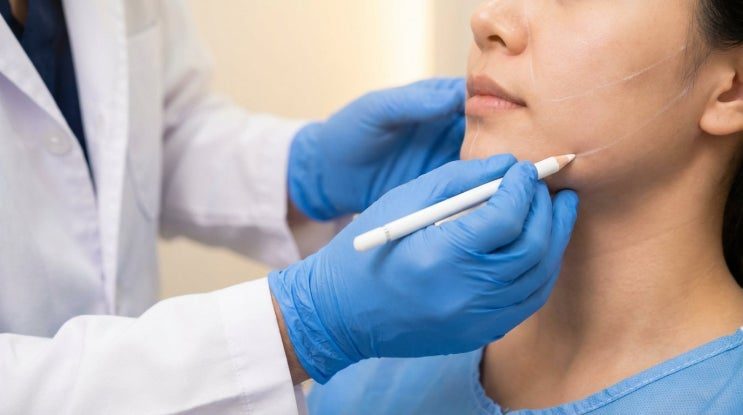
That doesn’t mean device injection is pointless. When a large surface needs to be covered in a short time, the device has a clear advantage. The real question is which area you’re treating and how delicately it needs to be handled.
Worried about pain? What should you check first?
The biggest reason people hesitate over manual injection is pain. Because each point is placed by hand, they assume it will hurt more than a device. In practice, how it feels depends largely on the anesthesia. With appropriate topical numbing, such as lidocaine cream, the discomfort can be reduced while keeping the precision that manual injection offers.
On the other hand, if you choose a procedure without checking the method and the numbing plan, it can hurt more than expected. Some people then put off the next session, or spend time and money without noticing the change they hoped for. Cost also varies with the dose, the area, and the method, so check what’s included as well.
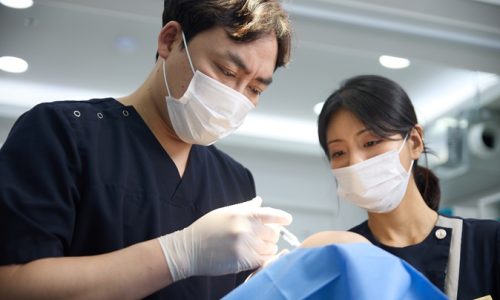
When patients tell me they’ve had it done with a device before, I first ask which area left them unsatisfied and how they were numbed. Listening to the answers, it’s often not that the method itself was the problem but that the goal and the area didn’t match. So even with the same Rejuran, I plan the face area by area, and for patients who are sensitive to pain I make sure the numbing has fully taken effect before starting.
Sometimes redness and flaking turn out to come from an inflammatory skin condition. In that case, a diagnosis comes before any skin booster.
What changes when Rejuran is combined with regenerative injections?
Rejuran is meaningful on its own, but depending on your skin, I also look at whether to pair it with a regenerative injection such as PRP. The two work differently. Polynucleotides supply nucleotides, the materials cells need to repair, while the growth factors in PRP are described as using those materials to drive cell proliferation.
A 2026 review in the International Journal of Molecular Sciences (Choi J et al., 2026) summarized that when PDRN is used together with other biochemical and physical regenerative therapies, they act through different pathways and may lead to better repair outcomes than one alone. That said, this is a review-level conclusion. Whether to combine them, and in what order, should be decided in consultation based on your skin.
Whether you’ve reached the stage of needing stem cells is covered separately in another post. I spent 18 years working in the ER and saw how much of a burden unnecessary procedures can be. That’s why I recommend only as much as your skin needs right now.