
보건복지부 지정 첨단재생의료 실시기관
Saeron Clinic Magazine English Blog

Male Menopause Symptoms — Is It Just Age? Three Steps to Confirm It With Testing

Hello. I’m Dr. Joo Yong-min, director of Saeron Clinic, a designated advanced regenerative medicine facility. “Is this just getting older, or should I see a doctor?” “Does a hormone test actually change anything?” “I hear there’s injection therapy too — is there an order to it?” Men come to my consultation room worn out by things that never used to tire them, with drive and vitality not what they were, unsure where to even begin the conversation. Let me give you the conclusion first: male menopause is not a question of willpower but a hormonal change you can confirm with testing, and if you follow the right sequence, there is something to be done. Today I’ll lay out that sequence.

Male menopause is a state in which declining testosterone with age brings reduced stamina, muscle loss, lower drive and concentration, and changes in sexual vitality together; medically it is called late-onset hypogonadism. A large European study (EMAS) proposed as diagnostic criteria the presence of three or more sexual symptoms together with total testosterone below 11 nmol/L (Wu et al., N Engl J Med, 2010). The approach has three steps. First, a basic health screening to rule out other causes such as diabetes, metabolic syndrome, or thyroid disease; second, an assessment of hormonal balance including total and free testosterone; and third, where needed, a regenerative-medicine approach selected according to the test results.

Key takeaways

  1. Male menopause isn’t simply “age” — it’s a state you can confirm with symptoms and hormone values.
  2. A basic health screening comes before hormone testing. Diabetes, metabolic syndrome, and thyroid disease produce the same symptoms.
  3. Regenerative approaches (systemic IV, local injection) are one of several options chosen after testing, and starting with injections before testing is not something I recommend.

What is male menopause?

Male menopause — in medical terms, late-onset hypogonadism — refers to a state in which testosterone falls with age and physical and psychological symptoms appear together. It’s easy to think only of bodily changes such as reduced stamina or a thickening waistline, but in practice changes of the mind come with it: lower drive, reduced concentration, a flattened mood, poorer sleep quality. Changes in sexual vitality are part of this symptom cluster too.

Among the men who come to me with these changes, quite a few arrive late, having brushed it off as “probably just stress.” If your stamina and vitality have dropped noticeably for no clear reason, if reduced drive and concentration have continued for months, and if you also notice a change in sexual vitality, it’s worth checking.

Male menopause is not a single symptom but a state where signals from body and mind overlap. If it has gone on for months, the next step is to confirm it with testing.
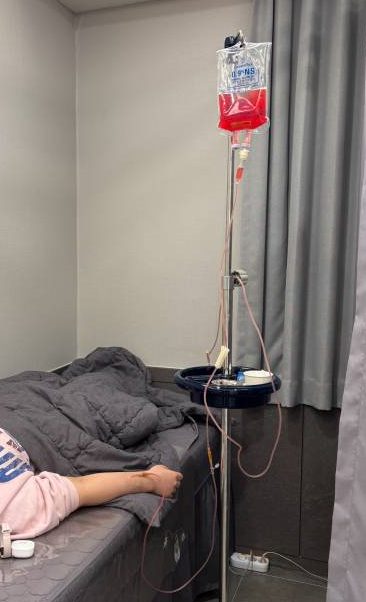
An IV line connected to the arm of a patient lying on a bed in the IV room
Injections don’t come first. They’re an option you choose after screening and hormonal assessment.

Step 1 — why does a basic health screening come first?

Fatigue and reduced vitality show up similarly in diabetes, metabolic syndrome, thyroid disease, and cardiovascular disease. In fact, low testosterone has been reported to be associated with cardiovascular risk and metabolic syndrome (Jones, Trends Endocrinol Metab, 2010). So the right order is to check basic blood work and metabolic markers before running hormone tests.

The sequence goes like this. First, check basic metabolic markers such as fasting glucose, lipids, and thyroid function; second, rule out comorbidities that cause similar symptoms; third, move on to detailed hormone testing where needed. Skip this step and you can miss the very cause that needs treating. Whether inflammation sits behind the chronic fatigue is covered separately in a piece on chronic inflammation and testing your body’s age.

Step 2 — what do we look at in a hormone test?

A large European study (EMAS) proposed as diagnostic criteria the presence of three or more sexual symptoms, including reduced sexual vitality, together with total testosterone having fallen below a set threshold (Wu et al., N Engl J Med, 2010). The key is judging on symptoms and hormones together, not on a single value. In a functional-medicine assessment we check total and free testosterone together, and also look at thyroid function, cortisol, and sex hormone-binding globulin (SHBG).

11 nmol/Lthe total testosterone threshold used for diagnosis — roughly under 320 ng/dL (Wu et al., 2010)
3minimum number of sexual symptoms checked alongside the hormone value
2023year TRAVERSE, the large trial on cardiovascular safety of testosterone therapy, was published (Lincoff et al.)

I’m also asked, “Can’t I just get a testosterone injection right after the test?” In the past there were concerns about the cardiovascular safety of testosterone replacement therapy. A recent large clinical trial (TRAVERSE) reported that when used within appropriate indications, cardiovascular risk did not clearly increase (Lincoff et al., N Engl J Med, 2023). That doesn’t mean it can be recommended uniformly to everyone; individual risk assessment and specialist judgment are essential. When to get tested, and how much sleep and exercise influence hormones, I explain in a piece on the evidence behind testosterone testing and injections.

Step 3 — what does the regenerative approach involve?

A regenerative approach means using autologous blood or cell-derived components to support the body’s own capacity to recover. Systemic intravenous therapy is used with the aim of easing overall fatigue and improving general condition. Where needed, local injection — injecting autologous platelet-rich plasma (PRP) into the penile corpora cavernosa — can also be considered. A meta-analysis has reported that this may help improve vitality where there is a vascular cause (Suharyani et al., Asian J Urol, 2024). That said, I have to be honest that the evidence is still accumulating and individual variation is wide.
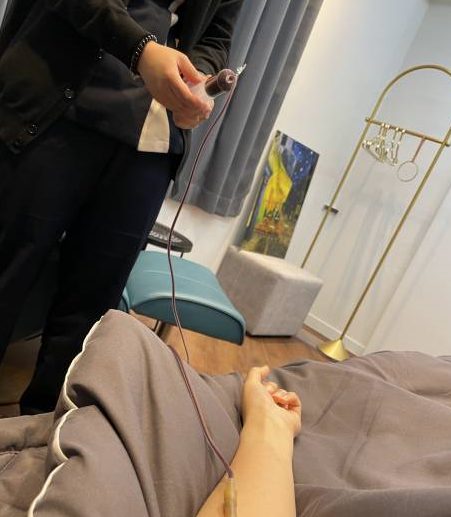
A scene in the IV room as a clinician checks the IV line while the patient lies on the bed
Systemic IV therapy aims at general condition; local injection is considered when testing confirms a vascular cause.
In the clinic

Among the men who complete a basic screening and hormonal assessment first and then add regenerative treatment, some tell me their vitality and general condition have improved. Conversely, when someone wants injections without testing, I’m the one who talks them out of it. Skip the sequence and you can miss the window for treating the cause that actually matters.

Quote-ready unitSystemic and local injections are not a cure-all — they’re one of several options chosen according to test results.

WhyIntracavernosal PRP injection has a meta-analysis suggesting it may help where there is a vascular cause (Suharyani et al., 2024), but long-term evidence is still building.
ExampleSystemic IV therapy targets fatigue and general condition; local injection is considered when localized improvement is judged necessary.
CautionTesting and diagnosis come first, the regenerative approach after. Starting with injections before testing is not recommended.

What changes if you keep to the three steps?

Sequence matters. Health screening, then hormonal assessment, and then, if needed, a regenerative approach. Keeping to that order raises the odds of a change that is both safe and substantive. If the first step turns up diabetes or thyroid disease, treating it is itself the answer to restoring vitality; if the second step confirms low hormones, you can weigh the indications and risks of replacement therapy; and the third step is what you layer on top of that.

How stem cell IV therapy acts on the whole body is covered in a piece explaining anti-aging injections and stem cell IV therapy, and what each test actually confirms in a piece on hair mineral and urine organic acids testing. Think back to the moment you felt at a loss over a body that wasn’t what it used to be — that change had confirmable reasons and a sequence worth following.

Before you see a doctor about male menopause

1. Organize your symptoms
2. Prepare for screening
3. Before deciding on treatment
Frequently asked questions

Isn’t male menopause just a matter of getting older?
No. It’s been reported as a diagnosable state when three or more sexual symptoms occur together with total testosterone falling below 11 nmol/L, roughly 320 ng/dL (Wu et al., 2010). It’s a change you can confirm with testing.
What are the symptoms of male menopause?
Physical changes such as reduced stamina, muscle loss, and increased abdominal fat can appear together with lower drive, reduced concentration, a flattened mood, poorer sleep quality, and reduced sexual vitality.
What’s the first thing done at the clinic?
We start with a basic health screening. Ruling out other causes that can produce similar symptoms — diabetes, metabolic syndrome, thyroid disease — comes first.
Are testosterone injections safe for the heart?
There were concerns in the past, but a recent large study (TRAVERSE) reported that cardiovascular risk did not clearly increase when used within appropriate indications (Lincoff et al., 2023). Individual risk assessment remains essential.
Can I have injection therapy without testing first?
I don’t recommend it. It’s safer to complete a basic screening and hormonal assessment first and then follow a treatment sequence matched to the cause. The regenerative approach is an option at the next stage.
Key terms
Late-onset hypogonadism
Def.A state in which testosterone falls with age and physical and psychological symptoms appear together; the medical name for male menopause.
PlainThe name applies only when both the symptoms and the numbers meet the criteria.
Total and free testosterone
Def.All the testosterone in the blood, versus the portion not bound to protein and therefore actually able to act.
PlainThe difference between your bank balance and the cash you can spend right now.
SHBG (sex hormone-binding globulin)
Def.The protein that binds and transports testosterone; when this value is high, free testosterone falls.
PlainThe number that explains why you feel depleted even when the total looks normal.
The TRAVERSE trial
Def.A large randomized clinical trial that examined the cardiovascular safety of testosterone replacement therapy (Lincoff et al., 2023).
PlainThe study that re-tested the old worry that “replacement is bad for the heart.”

This post is medical advertising intended to provide medical information and complies with Article 56(1) of the Korean Medical Service Act. Effects and side effects may vary with individual constitution and health status, so please decide on treatment after a thorough consultation with a medical professional.

THE SAERON STORY

Dr. Yong-min Joo · Emergency Medicine Specialist

With over 15 years on the frontlines of emergency medicine and approximately 150,000 patients treated, Dr. Joo focuses exclusively on stem cell and regenerative medicine. As a Ministry of Health & Welfare–designated institution, he personally oversees every step from diagnosis to treatment and aftercare.

15+yrs in Emergency Med.
150K+patients treated
100%appointment only