



What is male menopause?
Male menopause — in medical terms, late-onset hypogonadism — refers to a state in which testosterone falls with age and physical and psychological symptoms appear together. It’s easy to think only of bodily changes such as reduced stamina or a thickening waistline, but in practice changes of the mind come with it: lower drive, reduced concentration, a flattened mood, poorer sleep quality. Changes in sexual vitality are part of this symptom cluster too.
Among the men who come to me with these changes, quite a few arrive late, having brushed it off as “probably just stress.” If your stamina and vitality have dropped noticeably for no clear reason, if reduced drive and concentration have continued for months, and if you also notice a change in sexual vitality, it’s worth checking.
Male menopause is not a single symptom but a state where signals from body and mind overlap. If it has gone on for months, the next step is to confirm it with testing.
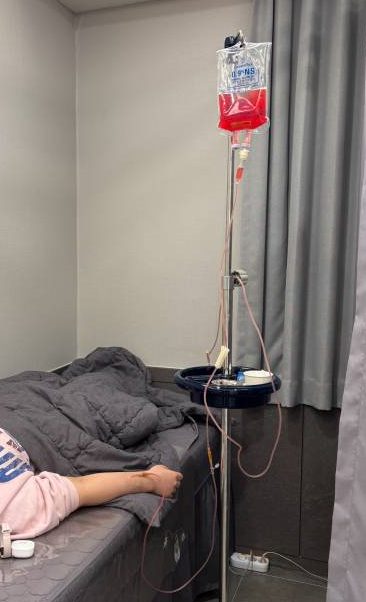
Step 1 — why does a basic health screening come first?
Fatigue and reduced vitality show up similarly in diabetes, metabolic syndrome, thyroid disease, and cardiovascular disease. In fact, low testosterone has been reported to be associated with cardiovascular risk and metabolic syndrome (Jones, Trends Endocrinol Metab, 2010). So the right order is to check basic blood work and metabolic markers before running hormone tests.
The sequence goes like this. First, check basic metabolic markers such as fasting glucose, lipids, and thyroid function; second, rule out comorbidities that cause similar symptoms; third, move on to detailed hormone testing where needed. Skip this step and you can miss the very cause that needs treating. Whether inflammation sits behind the chronic fatigue is covered separately in a piece on chronic inflammation and testing your body’s age.
Step 2 — what do we look at in a hormone test?
A large European study (EMAS) proposed as diagnostic criteria the presence of three or more sexual symptoms, including reduced sexual vitality, together with total testosterone having fallen below a set threshold (Wu et al., N Engl J Med, 2010). The key is judging on symptoms and hormones together, not on a single value. In a functional-medicine assessment we check total and free testosterone together, and also look at thyroid function, cortisol, and sex hormone-binding globulin (SHBG).
I’m also asked, “Can’t I just get a testosterone injection right after the test?” In the past there were concerns about the cardiovascular safety of testosterone replacement therapy. A recent large clinical trial (TRAVERSE) reported that when used within appropriate indications, cardiovascular risk did not clearly increase (Lincoff et al., N Engl J Med, 2023). That doesn’t mean it can be recommended uniformly to everyone; individual risk assessment and specialist judgment are essential. When to get tested, and how much sleep and exercise influence hormones, I explain in a piece on the evidence behind testosterone testing and injections.
Step 3 — what does the regenerative approach involve?
A regenerative approach means using autologous blood or cell-derived components to support the body’s own capacity to recover. Systemic intravenous therapy is used with the aim of easing overall fatigue and improving general condition. Where needed, local injection — injecting autologous platelet-rich plasma (PRP) into the penile corpora cavernosa — can also be considered. A meta-analysis has reported that this may help improve vitality where there is a vascular cause (Suharyani et al., Asian J Urol, 2024). That said, I have to be honest that the evidence is still accumulating and individual variation is wide.
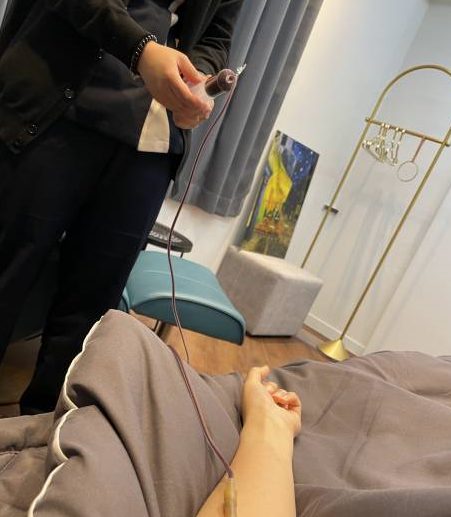
Among the men who complete a basic screening and hormonal assessment first and then add regenerative treatment, some tell me their vitality and general condition have improved. Conversely, when someone wants injections without testing, I’m the one who talks them out of it. Skip the sequence and you can miss the window for treating the cause that actually matters.
What changes if you keep to the three steps?
Sequence matters. Health screening, then hormonal assessment, and then, if needed, a regenerative approach. Keeping to that order raises the odds of a change that is both safe and substantive. If the first step turns up diabetes or thyroid disease, treating it is itself the answer to restoring vitality; if the second step confirms low hormones, you can weigh the indications and risks of replacement therapy; and the third step is what you layer on top of that.
How stem cell IV therapy acts on the whole body is covered in a piece explaining anti-aging injections and stem cell IV therapy, and what each test actually confirms in a piece on hair mineral and urine organic acids testing. Think back to the moment you felt at a loss over a body that wasn’t what it used to be — that change had confirmable reasons and a sequence worth following.